close menu icon

New Elementary School in Brooklin

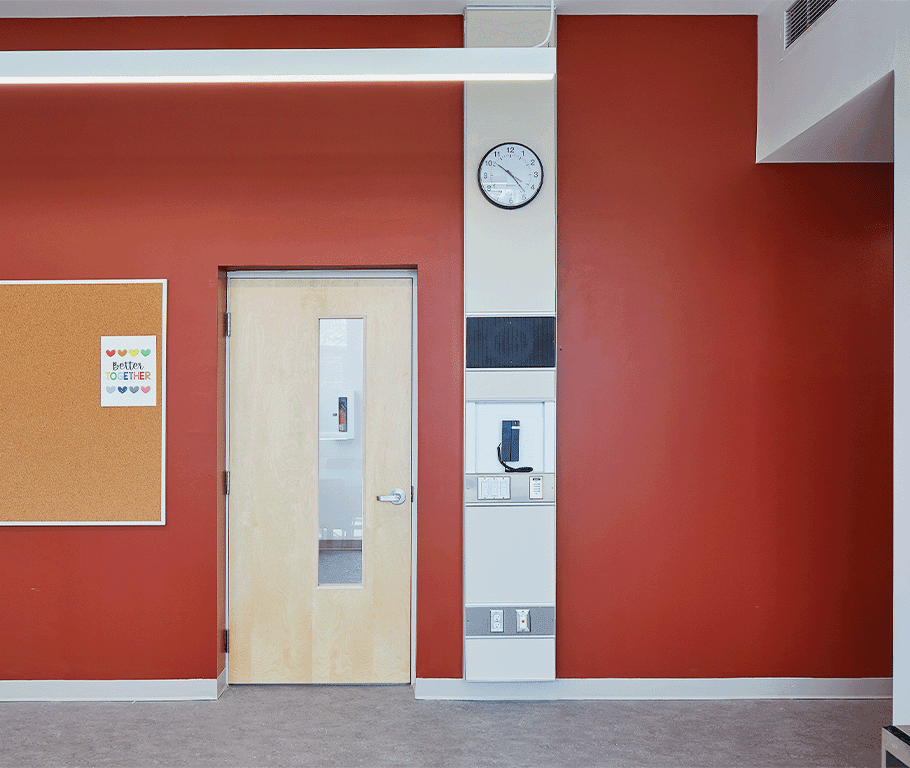
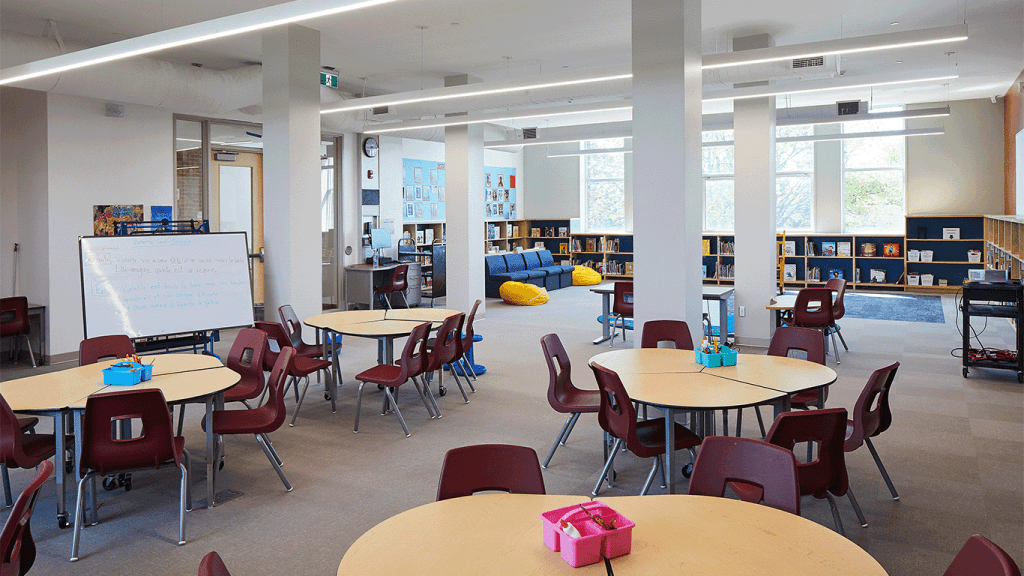
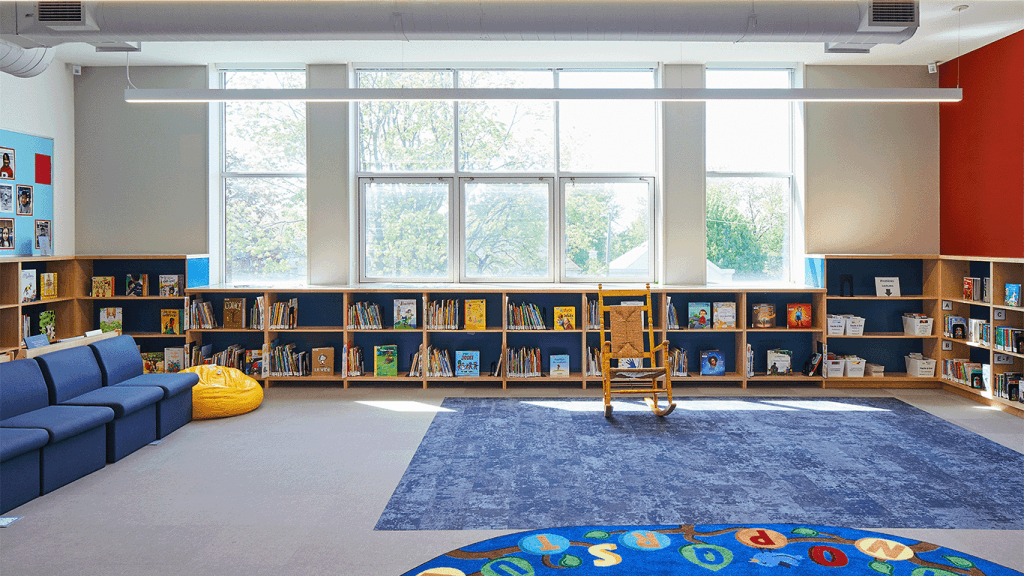
Bortolotto was commissioned by Mon Avenir Conseil Scolaire Catholique to design and build a new elementary school and child care center. The 43,000-sf facility will accommodate over 350 elementary students from Junior Kindergarten to Grade 6, alongside a child care centre for 50 children.

We opted to position the building close to the street to create a cohesive streetscape, emphasize walkability, and forge a strong connection to the community. Pedestrian access and safety were also key considerations, with vehicular access limited to one driveway, strategically located away from the primarily residential side streets to reduce pedestrian crossings. The main play areas are located behind the school. 

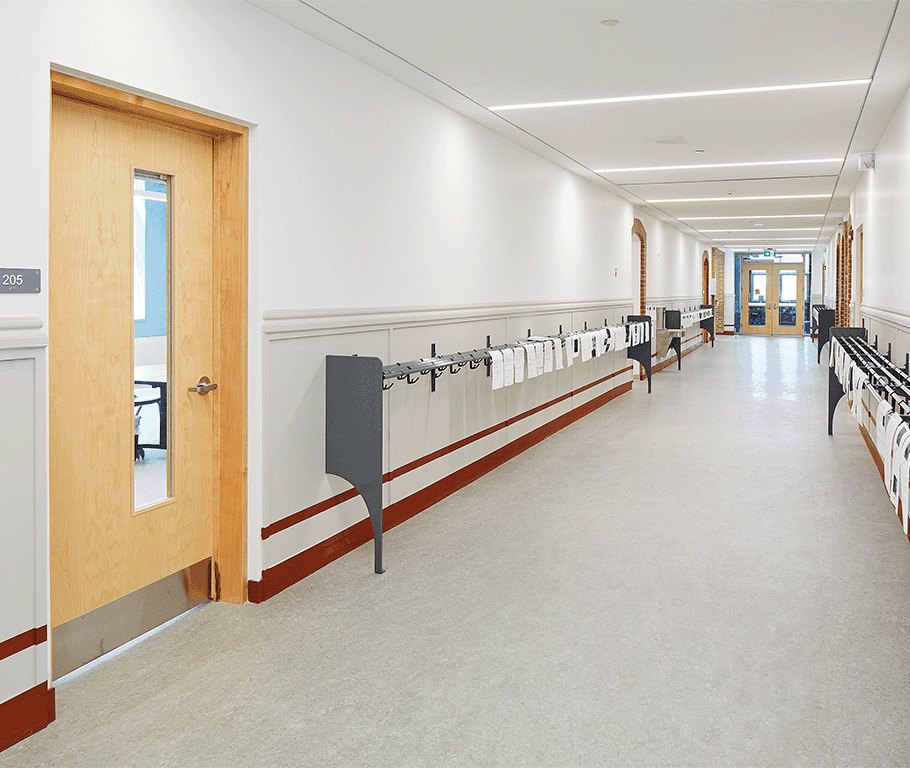
The new Brooklin Elementary School and Child Care Centre was conceived as a U-shaped building sitting tight to the property lines that mark the corner to create an edge condition along the two main streets. The building is one-storey, with double-loaded corridors intersecting at a central core that contains the gymnasium, library, lunchrooms, and mechanical spaces. One part accommodates administration offices near the front office, main entry, and child care facilities, while the other contains classrooms in a standard layout.

This design concept ensures maximum efficiency and access to natural light for the spaces along each wing, with mechanical spaces not requiring daylight centrally located at the inside corner of the L-shaped ground floor plan. This layout also allows for easy expansion along the classroom wing, if required in the future.

Project Information

Type
Educational
Location
Toronto, ON
Client
CSC Mon Avenir
Year
2025
Size
42,986 sf

Team
Tania Bortolotto, OAA, ARIDO, LEED AP, FRAIC
Alex Horber, OAA, LEED GA
Fatima Araujo, OAA Intern
Santiago Orozco
Yukun Bai, OAA Intern

Chantal-Benoit Elementary School & Child Care Centre

We designed a new building for École Élémentaire Chantal-Benoit that accommodates over 260 students from Kindergarten to Grade 6, along with a child care facility for 50 children, in keeping with the Ministry of Education’s space templates for elementary schools and child care facilities.

The long, linear L-shaped building is anchored by one-and-a-half-storey volumes at each end, as well as at the prominent corner where the main streets intersect, subtly reinforcing the school’s presence in the community. A continuous horizontal datum, articulated through varied masonry treatments along the façades, serves as a unifying design element, structuring the rhythm and placement of windows and doors while providing visual coherence across the building’s elevations. To emphasize the entrance, we designed a sweeping, curved architectural form that intuitively guides visitors toward the main doors. Students and visitors are greeted by a bold yellow feature wall framed by a pair of columns, while a large aperture overhead introduces natural light below the canopy, creating a luminous focal point that enhances both visibility and a sense of arrival.

The property is surrounded by new single-family housing on the north and east sides. Future single-family housing is also anticipated on the south side, while a stormwater management pond lies to the west, bordering the protected ravine lands beyond the school property. We located the building along Murrell Boulevard and the future east-west street south of the site to ensure it would mesh with the surrounding community and offer convenient pedestrian access to the main entrance. This siting also allowed us to locate the play area further away from traffic and take advantage of views out to the ravine.

We limited vehicular access to the main entrance on Murrell Boulevard, locating it as far away as possible from the roundabout at the southeast corner of the site. Our design for the parking area maximizes bus drop-off spaces while minimizing aisles and pedestrian crossings.

Project Information

Type
Educational
Location
East Gwillimbury, ON
Client
CS Viamonde
Year
2025
Size
36,310 sf

Team
Tania Bortolotto, OAA, ARIDO
Alex Horber, OAA
John Budinsky, Dipl.Arch.Tech., BES
Yukun Bai, OAA Intern

Western North York Child Care Centre

Bortolotto undertook the design of a new child care centre within the Western North York Community Centre, a groundbreaking 77,000-sf facility designed by our colleagues at MJMA that earned the designation of Canada’s first “Aquatic-Based Net-Zero Energy Building.” We designed a 5-play room child care centre to accommodate preschool, toddler, and infant age groups, complemented by thoughtfully planned outdoor play areas. The process was a collaborative effort with child care operators, ensuring the spaces align with their specific needs. Each room was purposefully crafted to support distinct programmatic functions, including play, learning, rest, dining, and administration, while maintaining clear sightlines for optimal supervision.

The design emphasizes a strong connection to nature, incorporating expansive glass windows that frame views of the sky and lushly landscaped surroundings. Outdoor play areas include gardens and sandpits that foster exploration, sensory engagement, and active play. We applied child-friendly proportions to fixtures, furniture, and features, such as windows and sinks, ensuring accessibility and comfort for young children. Safety was also a significant priority, with secure entrances, monitoring systems, and controlled access areas integrated into the design. Additionally, sound-absorbing materials were used to mitigate noise, creating a serene and supportive learning environment. 

Project Information

Type
Education
Location
Toronto, ON
Client
City of Toronto
Year
2026
Size
8,850 sf

Team
Tania Bortolotto, OAA, ARIDO
Alex Horber, OAA
Sarah Fourie, OAA Intern
Elaine Welsher, OAA Intern
Yukun Bai, OAA Intern


Bannockburn French Immersion Centre

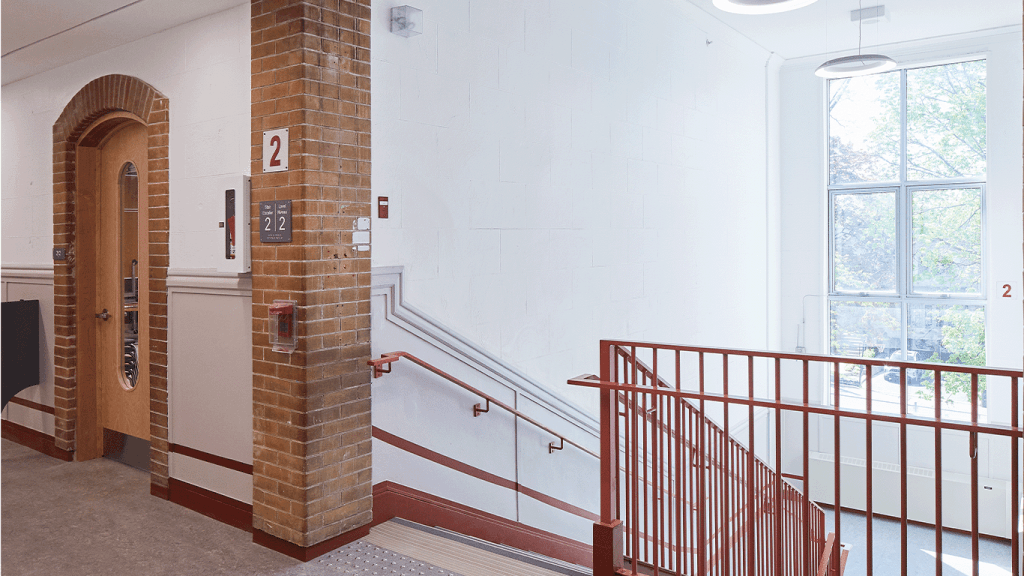
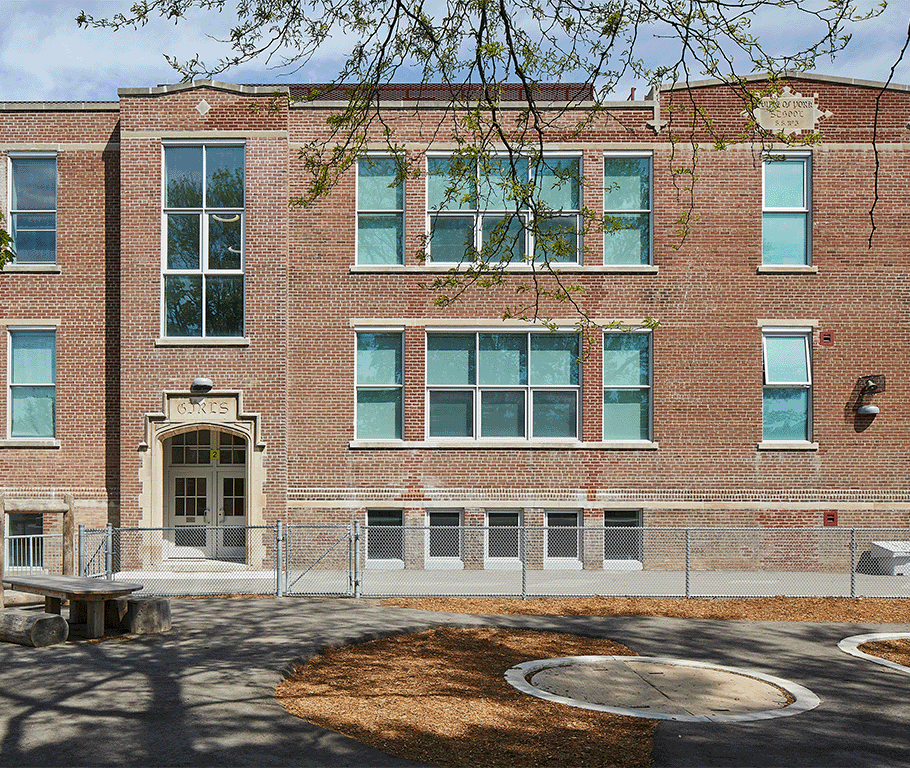
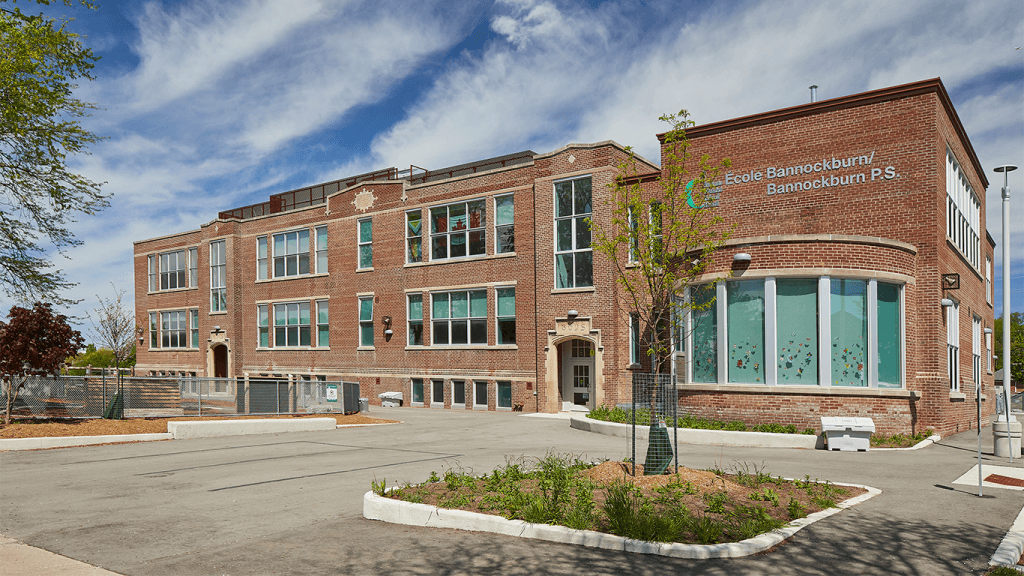
Built in 1924, the original one-storey school building had undergone numerous renovations and three additions: a storey was added above, and extensions were added to the east and west of the structure. As such, the project required working with a complex two-storey (plus full basement) building consisting of various structural elements: wood framing, mass timber, steel, and masonry. To rehabilitate it, we pursued a comprehensive exterior and interior renovation, upgrades to the mechanical and electrical systems, and extensive landscape work. 

To enhance the building envelope, we replaced all existing doors and windows with new ones that have half the U-value and replaced the roof with a new one that tripled the insulation value. The remainder of the envelope consisted largely of clay brick over structural clay tile. Without the option to overclad, the insulation was modestly upgraded while ensuring the clay tile structure would not accumulate moisture.

Within the school, we delivered a wide-ranging elementary school program, including three Kindergarten classrooms, six primary classrooms, four junior classrooms, one music room, a gymnasium, an office suite, a staff room and kitchenette, and support spaces, including storage, breakout rooms, and washrooms.

One of the main design challenges was how to strategically integrate modern, high-efficiency boilers and HVAC equipment into the building without compromising the original character of the spaces, which feature large windows and high plaster ceilings. Internal mechanical rooms were not an option due to space constraints, and the existing wood-framed structure was not adequate to support equipment on top of the roof as well as snow loads. To address this issue and avoid a full demolition and reconstruction, we proposed an innovative solution: an elevated dunnage platform supported by a standalone steel structure that extends through the building to newly constructed footings. The new system is automated and includes an Energy Recovery Ventilator that recovers approximately 70% of waste heat from the exhaust air. We also updated the electrical systems and replaced the existing lighting with LED lights to significantly reduce electricity use.

Other building upgrades included a new sprinkler system; fire-rated enclosures to separate the stairs from the basement level; code-compliant guards and handrails for the existing stair; and new lighting and electrical systems. We also renovated the existing gymnasium at the basement level, incorporating new athletic flooring, acoustic treatments, AV infrastructure, and automated sun-control systems.

Project Information

Type
Education
Location
Toronto, ON
Client
Toronto District School Board
Year
2025
Size
36,600 sf

Team
Tania Bortolotto, OAA, ARIDO, FRAIC
Alex Horber, OAA
Yukun Bai, OAA Intern
Tahir Pervaiz, OAA Intern
Farah Elbatish, OAA Intern
John Budinski, Dipl.Arch.Tech., BES

Verendrye Expansion

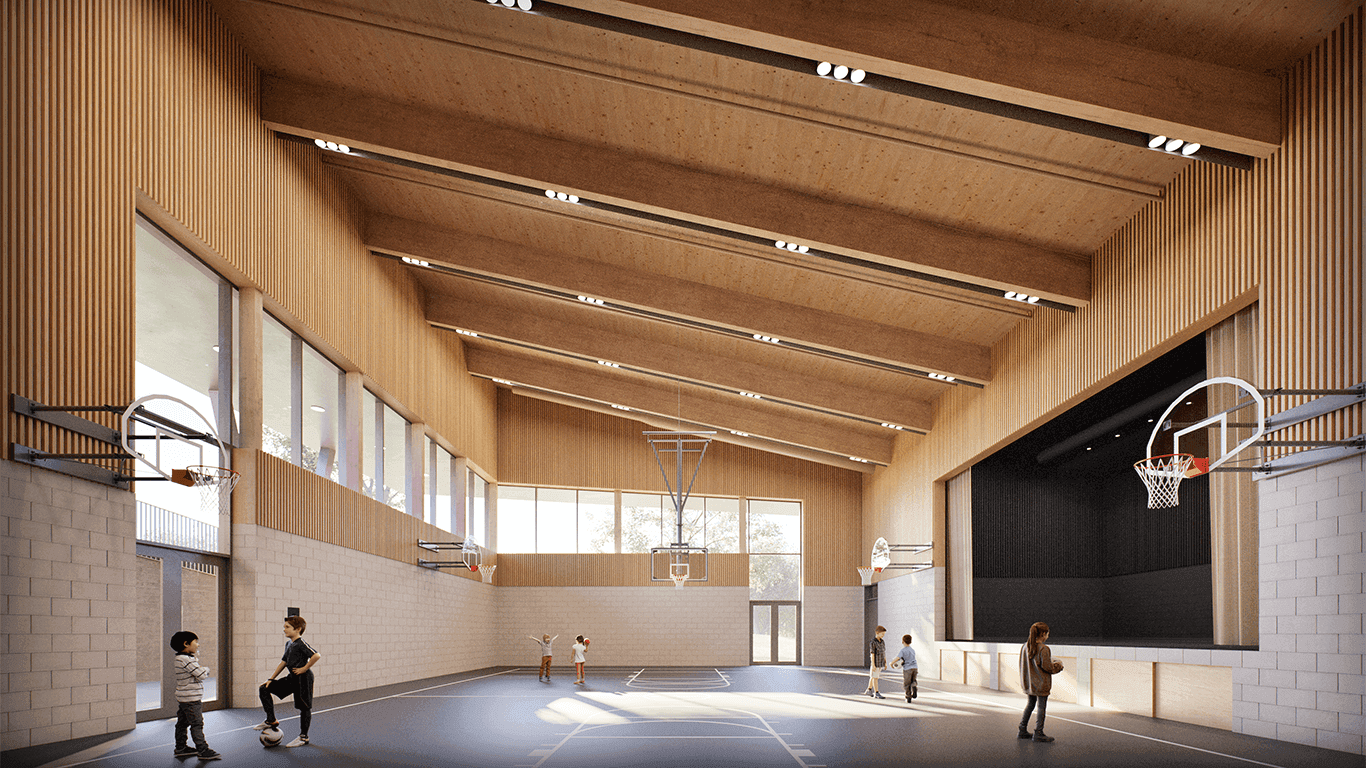
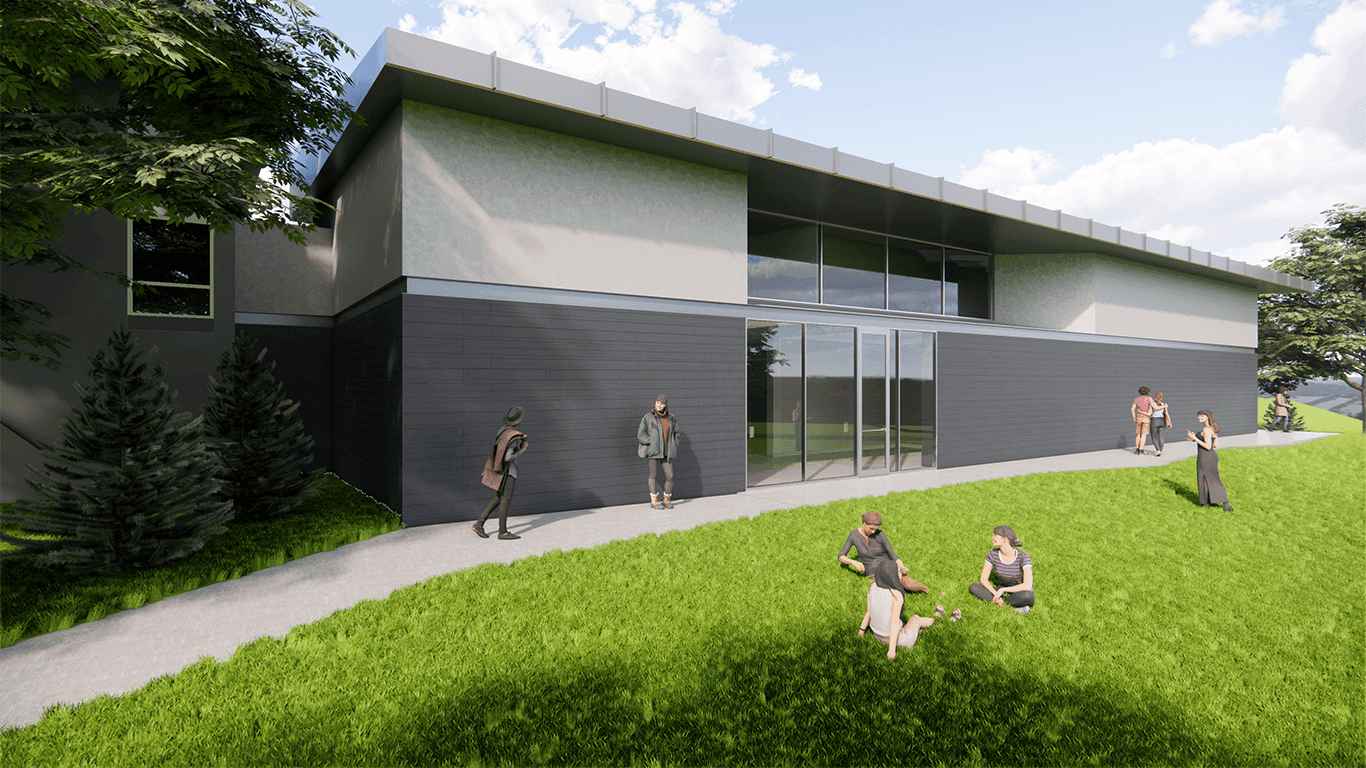
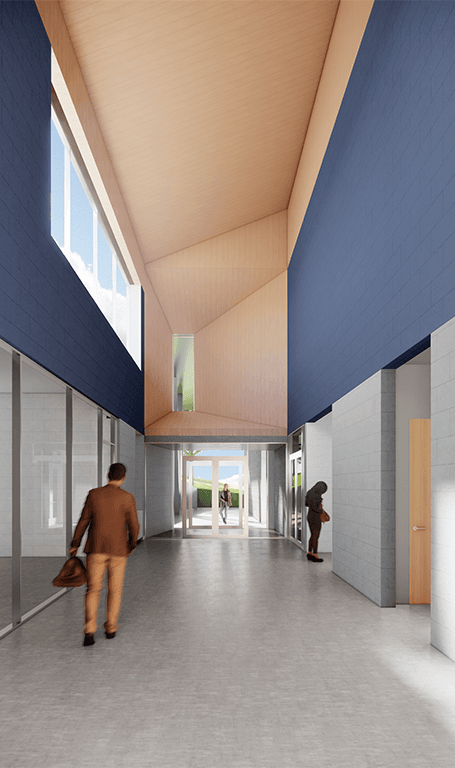
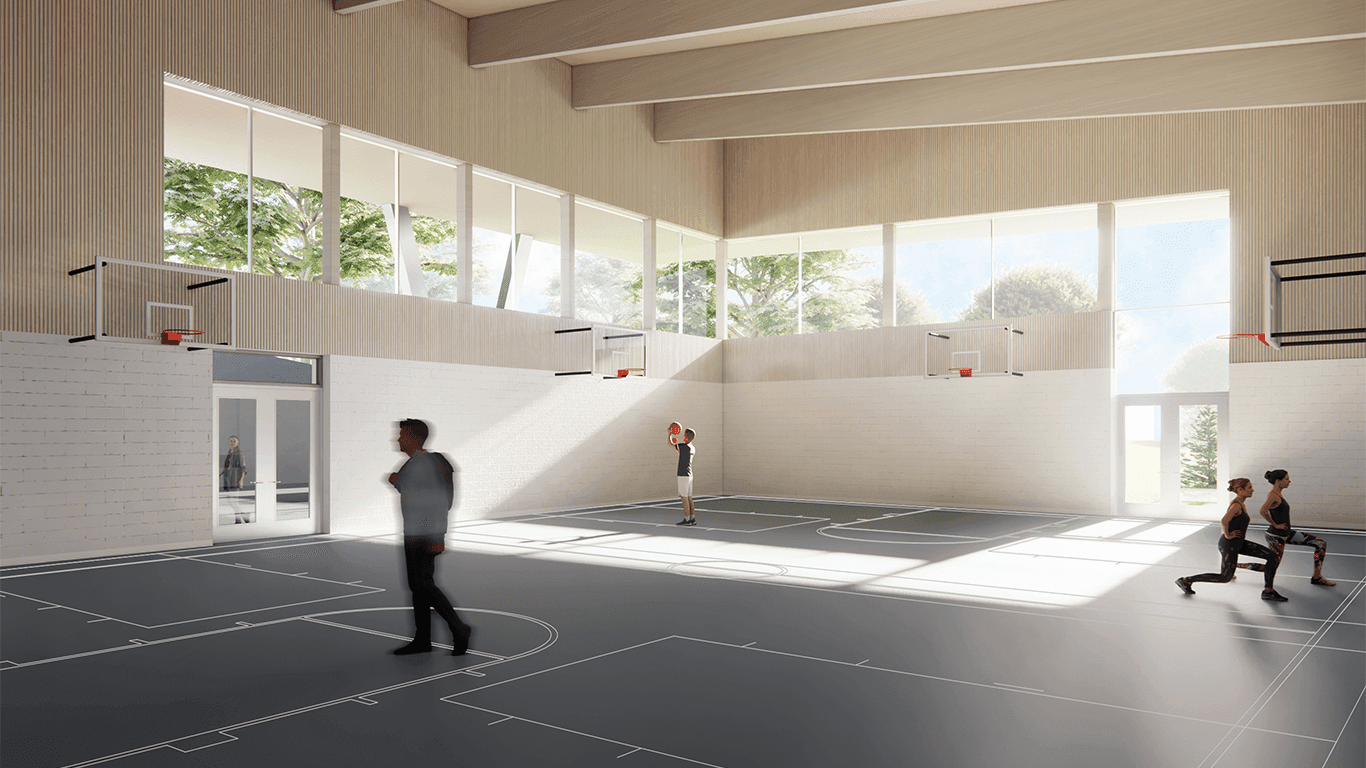
Featuring a new double-height public entrance, our proposed 10,000-sf addition to École secondaire catholique de La Vérendrye will house a new gymnasium, a full-size stage, staff offices, storage rooms, fitness rooms, and a large gender-neutral change room that includes individual washrooms, change rooms, and showers to serve both the new and existing gymnasiums.

The addition’s exterior design blends seamlessly with the building’s existing character while also introducing a contemporary aesthetic that complements the interior space. The massing strives to reimagine the conventional box-shaped gymnasium appearance. Our use of decorative concrete blocks and continuous metal cladding for the roof, fascia, and soffits enhance both functionality and visual appeal.

Our scheme introduces new windows at grade to bring in natural light and animate a more isolated area of the school property, thereby enhancing security via improved visibility, connecting inside and out. New glazing high up along the gymnasium wall will flood the interior with daylight and feature mechanical blinds that can be used to control brightness in the space.

Project Information

Type
Education
Location
Thunder Bay, ON
Client
CSDC des Aurores Boréales
Year
2025
Size
12,136 sf

Team
Tania Bortolotto, OAA, ARIDO, LEED AP, FRAIC
Alex Horber, OAA, LEED GA
John Budinsky, Dipl.Arch.Tech., BES
Yukun Bai, OAA Intern
Fatima Araujo, OAA Intern
Northlea Elementary & Middle School

For this second-storey addition to Northlea Elementary & Middle School, we prioritized natural light, higher ceilings, proper ventilation, accessible circulation, and spaces that encourage physical activity to support the overall well-being of students and staff. 

The main challenge of this addition project was that the new structure had to be built above and around existing elements that were not originally designed to support a second storey. We adopted several strategies to minimize damage to the existing structure and reduce costs. Because the new addition would have obstructed the windows of the existing classrooms, we added clerestory windows along the corridor, creating a light well that channels daylight into the classrooms.

Sleek black steel guardrails with angular lines define the perimeter of the new barrier-free accessible ramp and adjacent steps, which lead to a new student locker area.

Project Information

Type
Education
Location
Toronto, ON
Client
Toronto District School Board
Size
3,523 sf

Team
Tania Bortolotto, OAA, ARIDO
Alex Horber, OAA


Willow Park Junior School

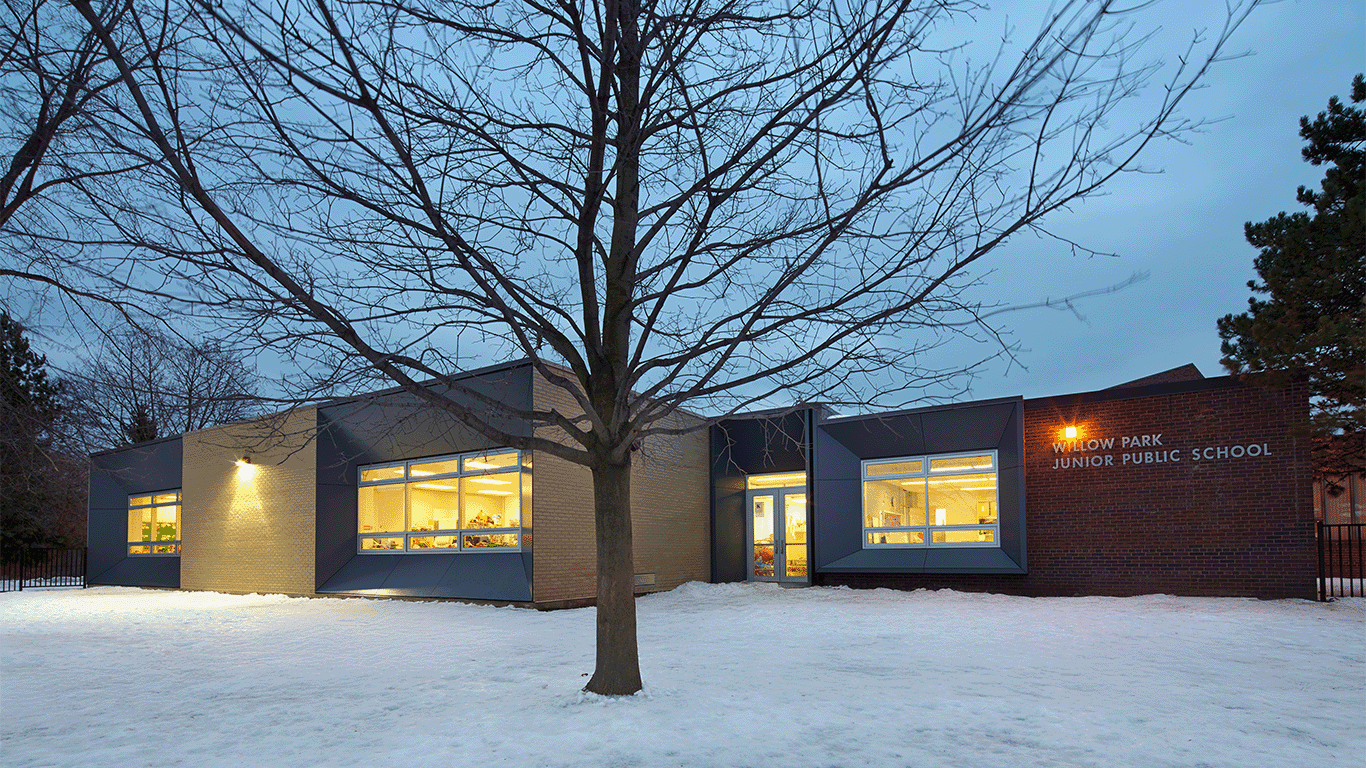
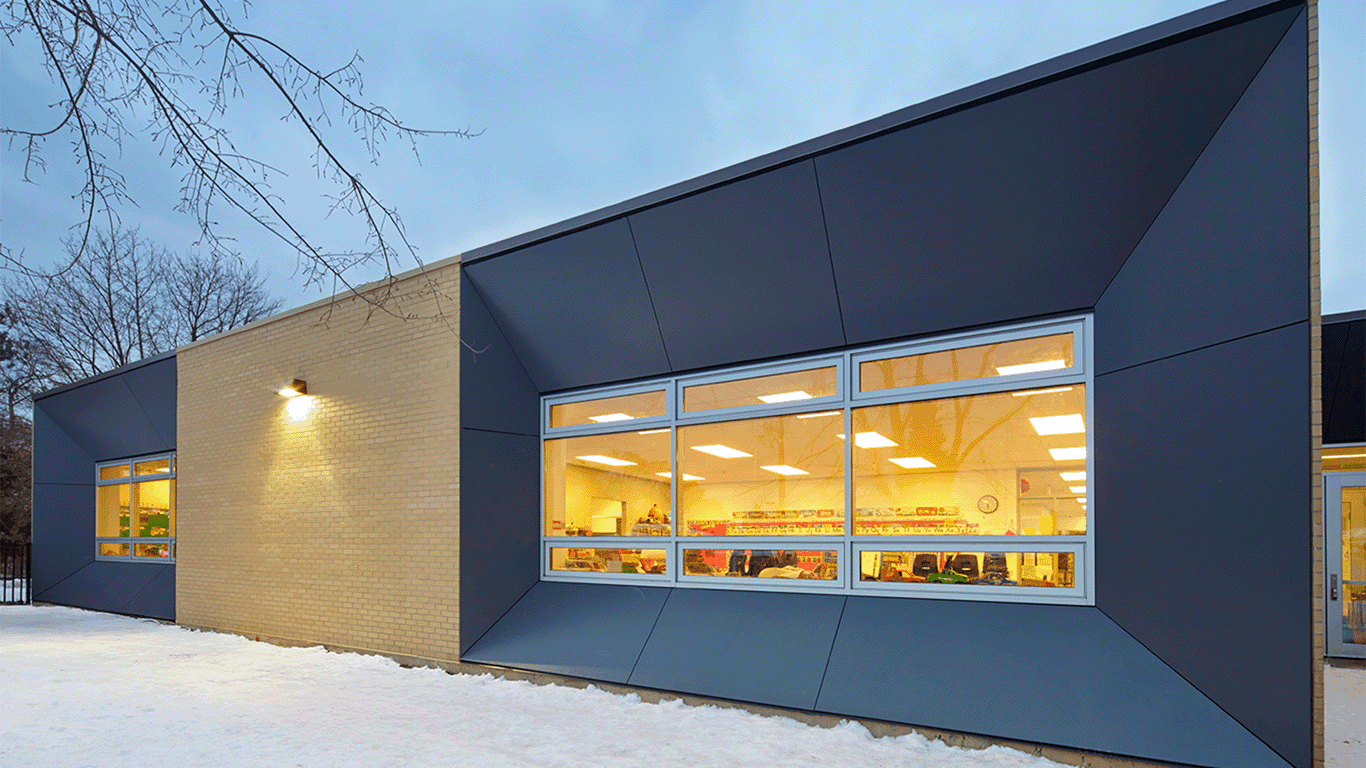
Bortolotto’s addition to Willow Park Junior Public School houses new purpose-built Kindergarten classrooms on the inside and reimagines the school’s façade on the outside. The design breathes new life into the building’s street-facing presence, thereby re-energizing the school itself as well as the surrounding community.

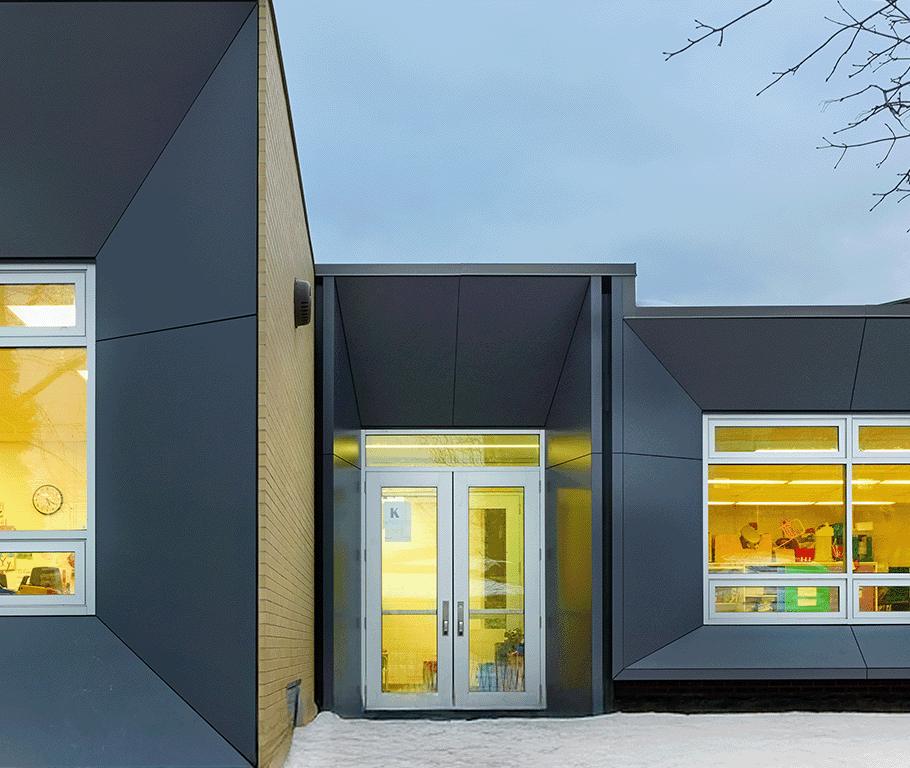
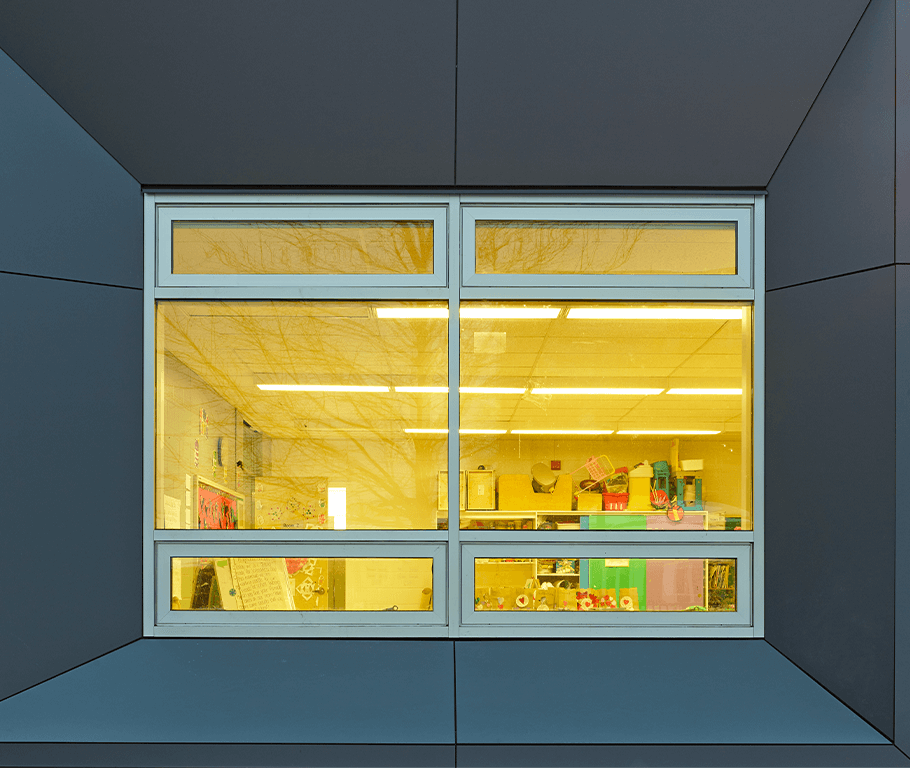
The complexity of the façade’s detailing belies the deliberate simplicity of the overall form. We designed a chamfered frame to recess the windows and angle the walls to create a sense of depth and dynamism. Sloped phenolic panels act like portals, drawing the eye inward and animating the building’s surface. We deployed contrasting colours and materials to enhance this three-dimensional skin, with a careful consideration for the articulations at the building’s corners. The result is a quiet yet expressive architectural gesture that revitalizes the school and its presence in the neighbourhood.

Our mandate also included improvements to the outdoor play area, the interior design of the new classrooms, as well as upgrades to the existing Kindergarten classrooms and cubbies.

Project Information

Type
Education
Location
Toronto, ON
Client
Toronto District School Board
Size
28,470 sf

Team
Tania Bortolotto, OAA, ARIDO
Alex Horber, OAA

Awards & Press

Press
Building Blocks
Canadian Architect, March 2013

Virtrium

The Virtrium was conceived as a laboratory for testing and experimenting with state-of-the-art technologies that manifest the Engineering Society’s reputation for innovation and position it as a creative and forward-thinking force both within and beyond the University.

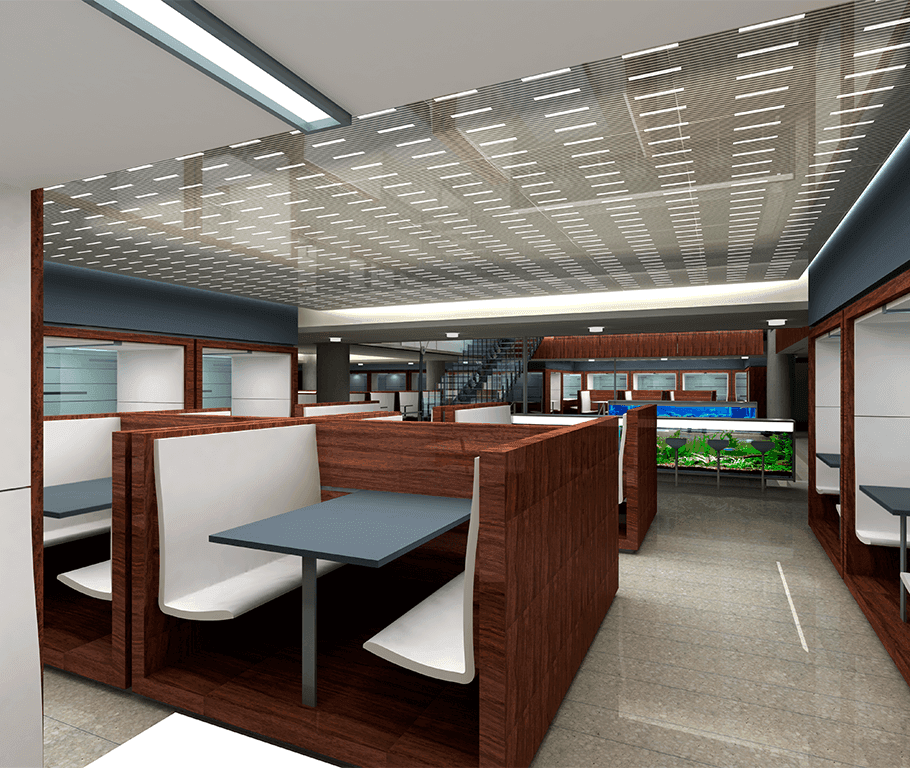
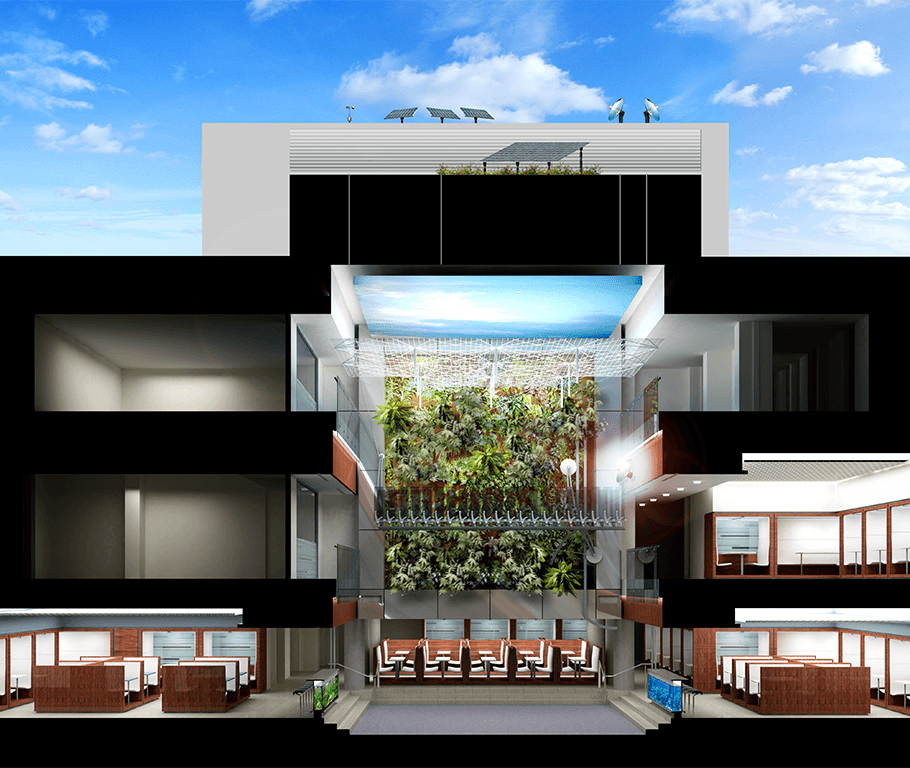
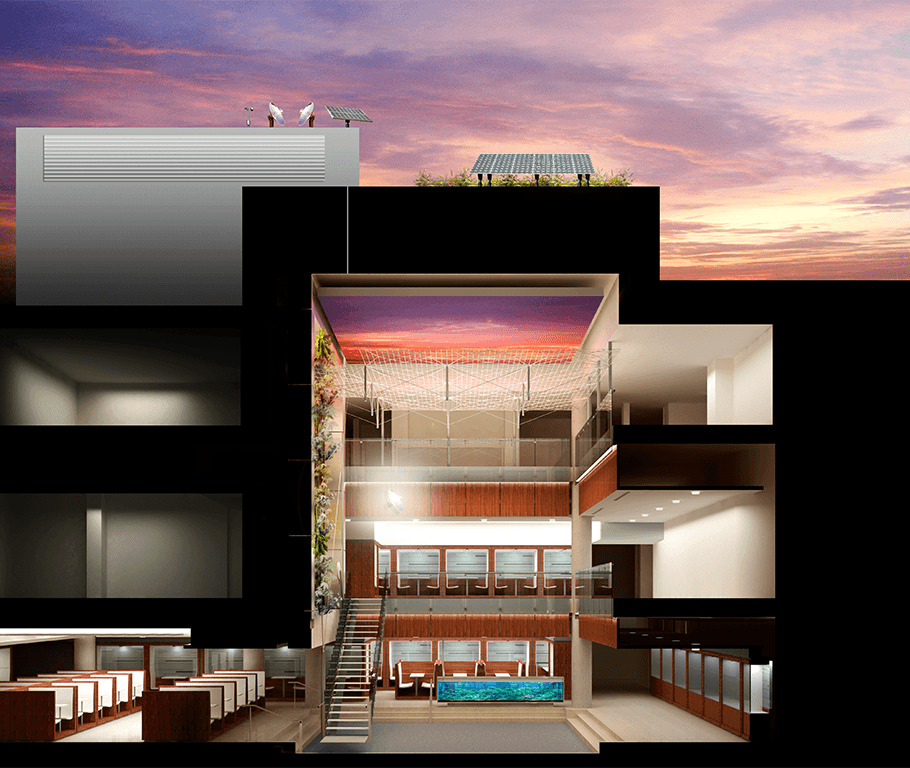
This windowless space, where students spend countless hours studying, learning, and socializing, provided an excellent — and challenging — opportunity to design for occupant health and well-being. With an emphasis on biophilic and technological interventions that connect students to the world outside, our design proposes digital means of capturing real-time changes in weather, lighting, and sounds and reflecting them internally within the building for students to experience. The project fundamentally reimagines the boundary between built and natural environments, inside and outside, real and digital. 

The feature element is a living wall, which captures airborne pollution inside the building and, through a process known as biofiltering, converts those pollutants into harmless byproducts. The biofiltering process does what healthy biosystems do through the process of photosynthesis: convert one system’s waste products into another’s nutrients, thereby purifying the air and removing about 80% of indoor contaminants

The scheme brings natural light into the biowall and disperses it throughout the space via fibre-optic bundles connected to sunlight collectors on the roof. The proposed Hybrid Solar Lighting (HSL) system switches to an electrical one, when needed, resulting in a potential savings of approximately 56,000 kilowatt hours per year. This feature also accrues benefits for students by helping them maintain their natural circadian rhythms, which are essential for focus, alertness, and effective study. Virtual-reality technologies enable the projection of real-time images of the sky onto the atrium ceiling.

The leading-edge nature of Virtrium’s design has enabled the Engineering Society to supplement its construction budget by inviting companies to install and test their latest equipment in the space. The Society is also applying for research and development funding for the installation and testing of the HSL system.

Project Information

Type
Education
Location
Toronto, ON
Client
University of Toronto
Size
9,000 sf

Team
Tania Bortolotto, OAA, ARIDO, FRAIC
Alex Horber, OAA, LEED GA
Jerry Lin, OAA
Cherry Yeung, OAA Intern
Awards & Press

Awards
Award of Excellence
Ontario Association of Architects, 2007 
Press
LEEP Architects designing for engineers
twentyandchange, 2007

A Green Solution for a Black Hole
Daily Commercial News, 2006


LinX

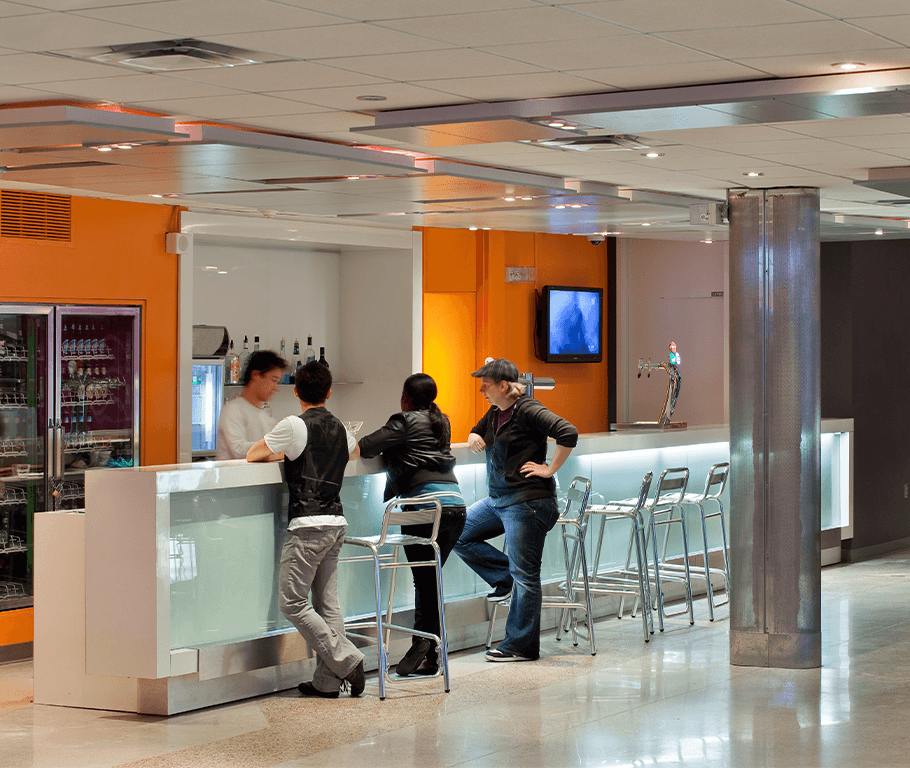
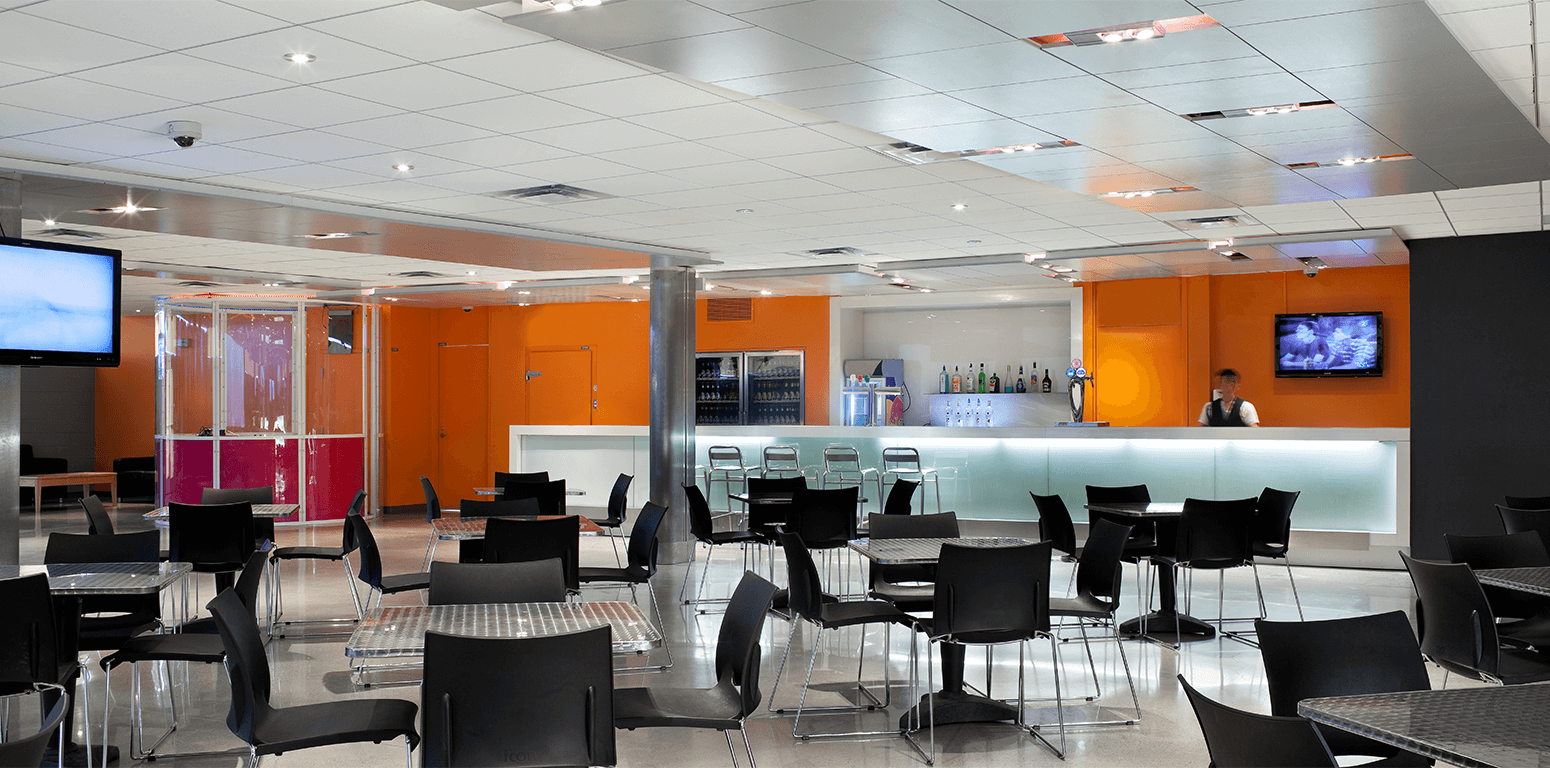
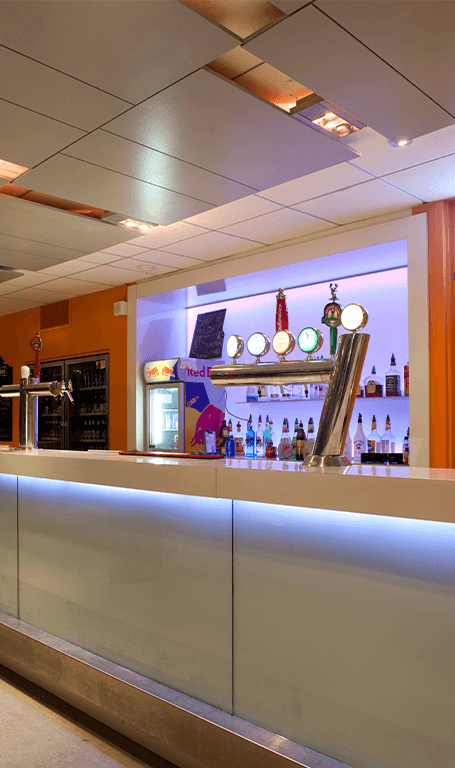
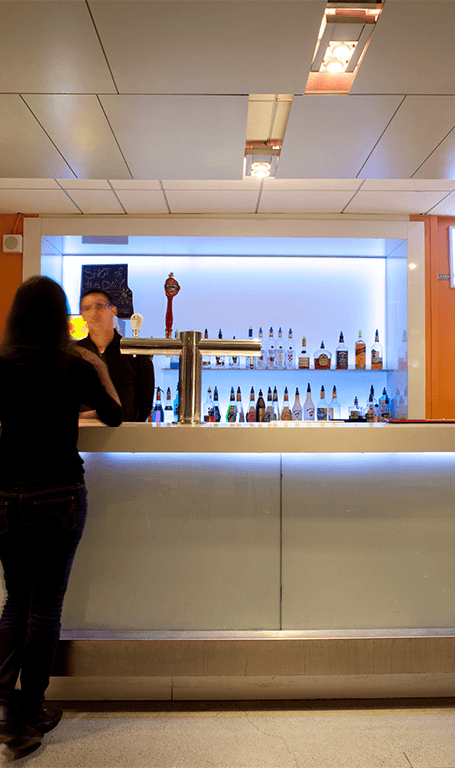
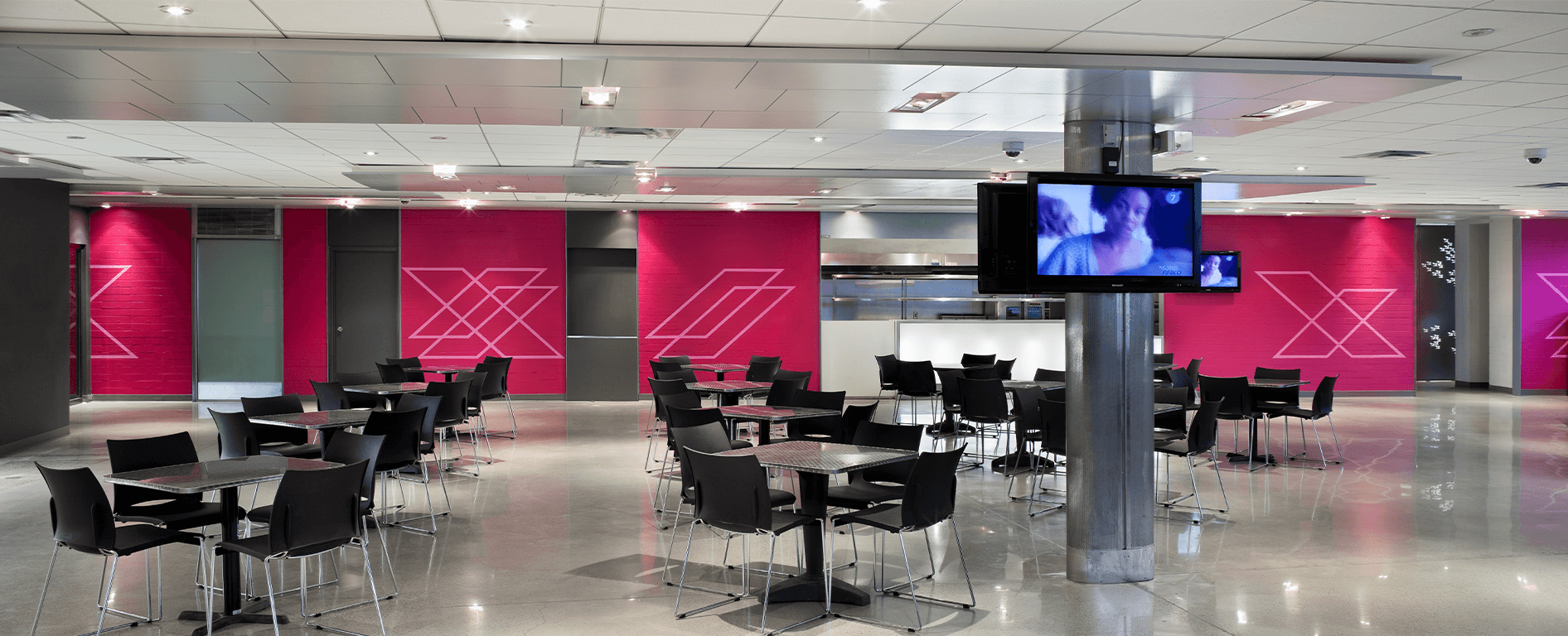
This adaptive reuse project introduces flexible spaces for a student lounge, restaurant, and pub and creates a lively new social and academic hub. The goal of the design is to foster spontaneous interactions, promote social cohesion, and encourage the development of meaningful and memorable experiences on the Humber College campus.

The project began with Bortolotto’s creation of LinX’s new branding, which became the inspiration for the overall design. The branded environment is holistically integrated into the architecture and interior design through colour and laser-cut metal wall panels that function as wayfinding, signage, and light fixtures. Reclaimed concrete floors, laser-cut panels, acrylic partitions, stainless steel, glass, and drapery all add to the texture, colour, and spirited character of the LinX brand.

To address the existing low and compressed ceilings, we designed a ceiling-tight layout finished in white to visually expand the space and maximize the perception of height. Rather than drawing attention to the ceiling, the design shifts the focus to a bold and expressive colour and graphic scheme. Vibrant accents of fuchsia and tangerine are paired with expansive areas of charcoal grey to create a dynamic, energetic environment that reflects and supports student life.

Our design for the new patio enclosure creates a welcoming entrance by softening the corner of the old masonry building; the curved wood fence element directs patrons toward the main entrance.

Project Information

Type
Education
Location
Toronto, ON
Client
Humber College
Size
8,200 sf

Team
Tania Bortolotto, OAA, ARIDO
Alex Horber, OAA
Jerry Lin, OAA

Awards & Press

Press
“X” marks the spot
Canadian Interiors, May 2011


Student Central

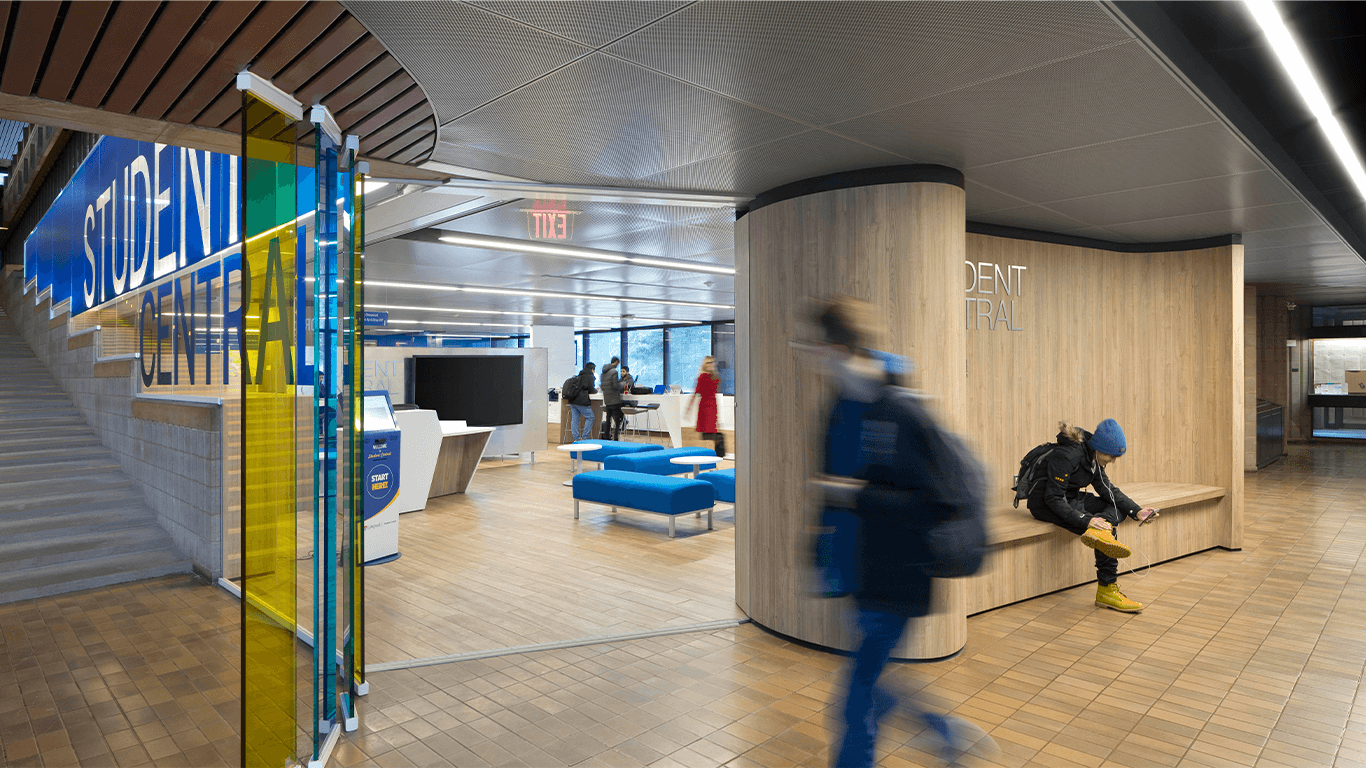
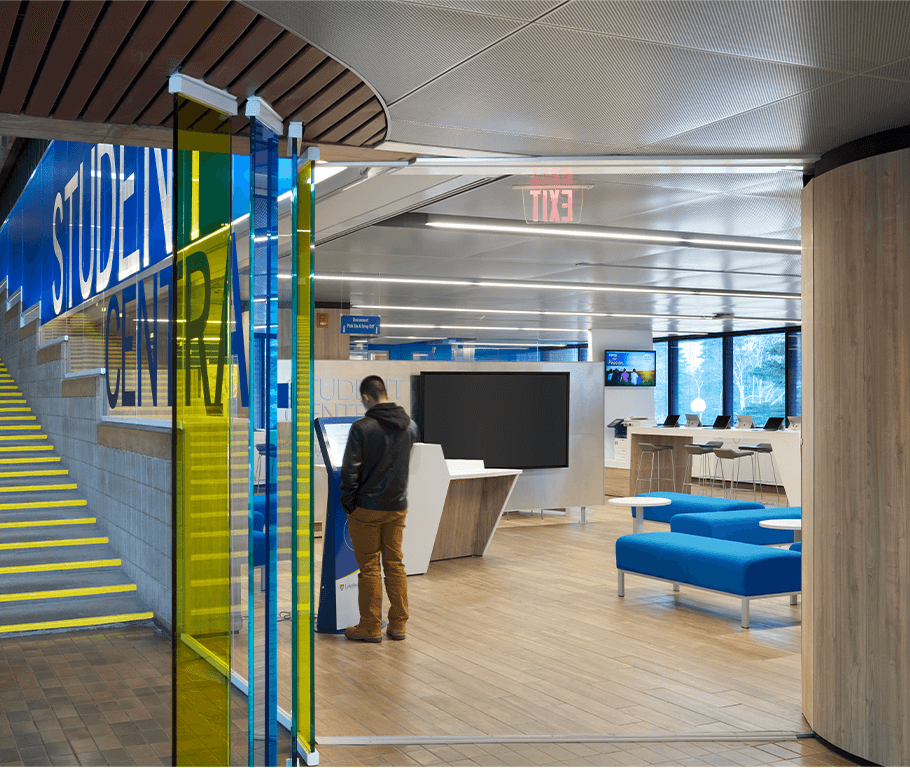
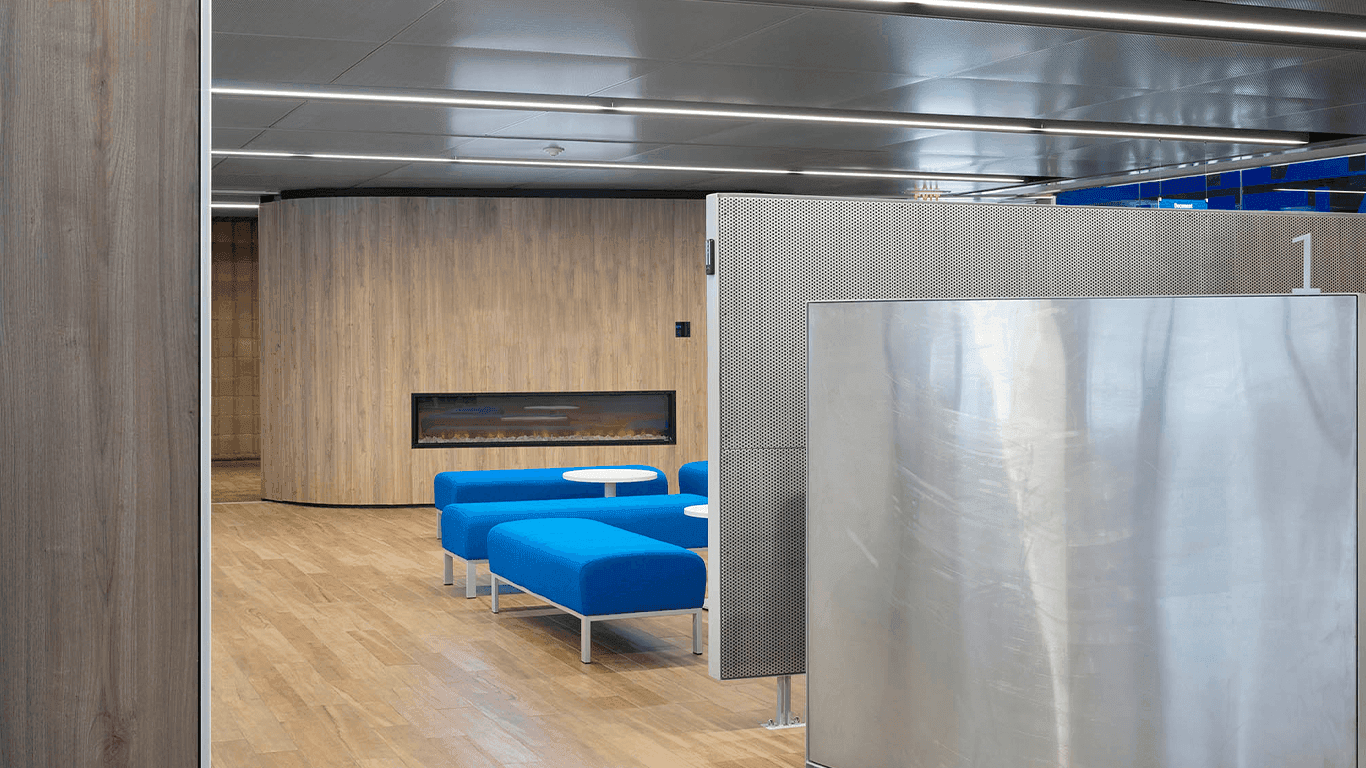
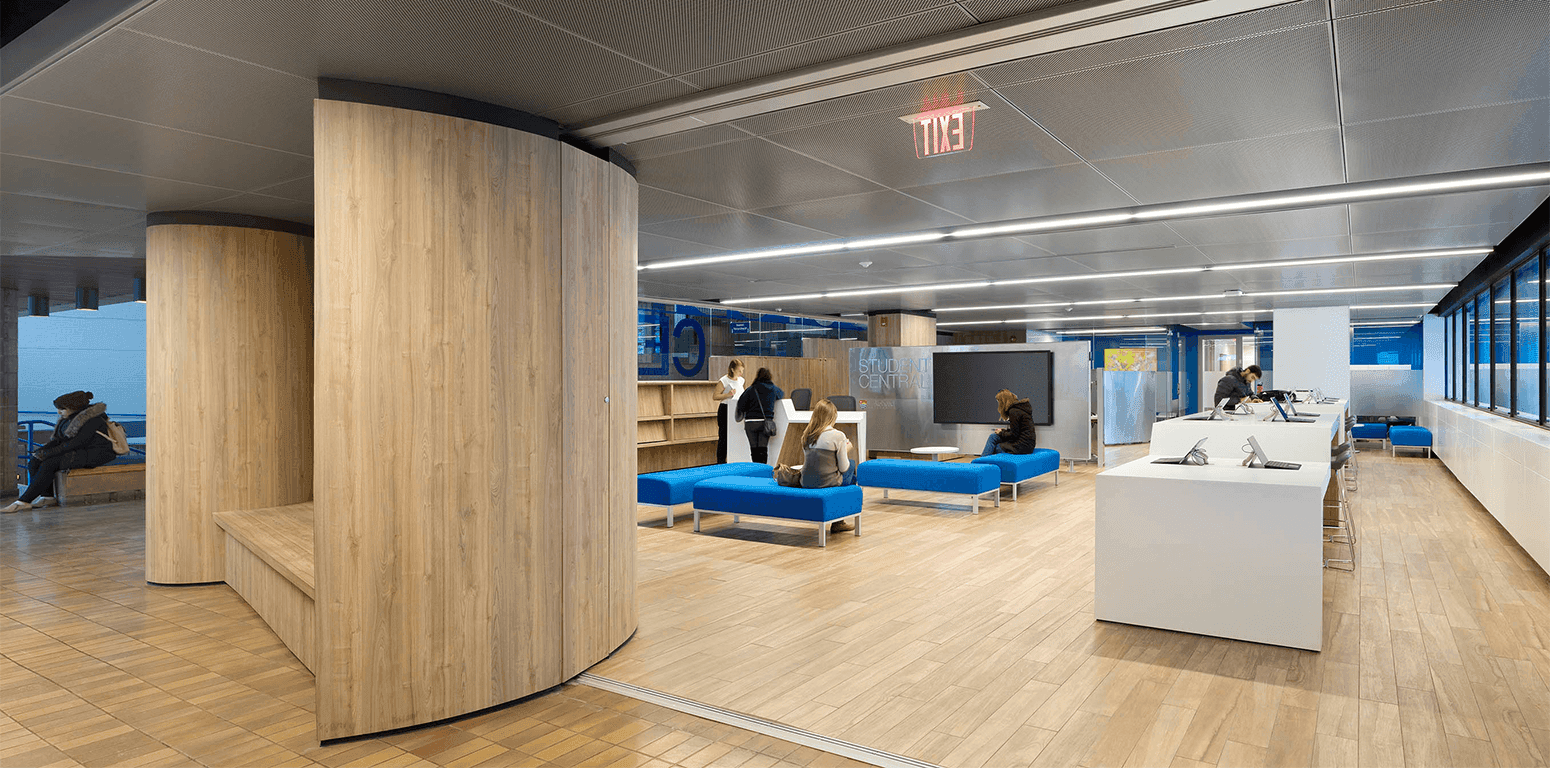
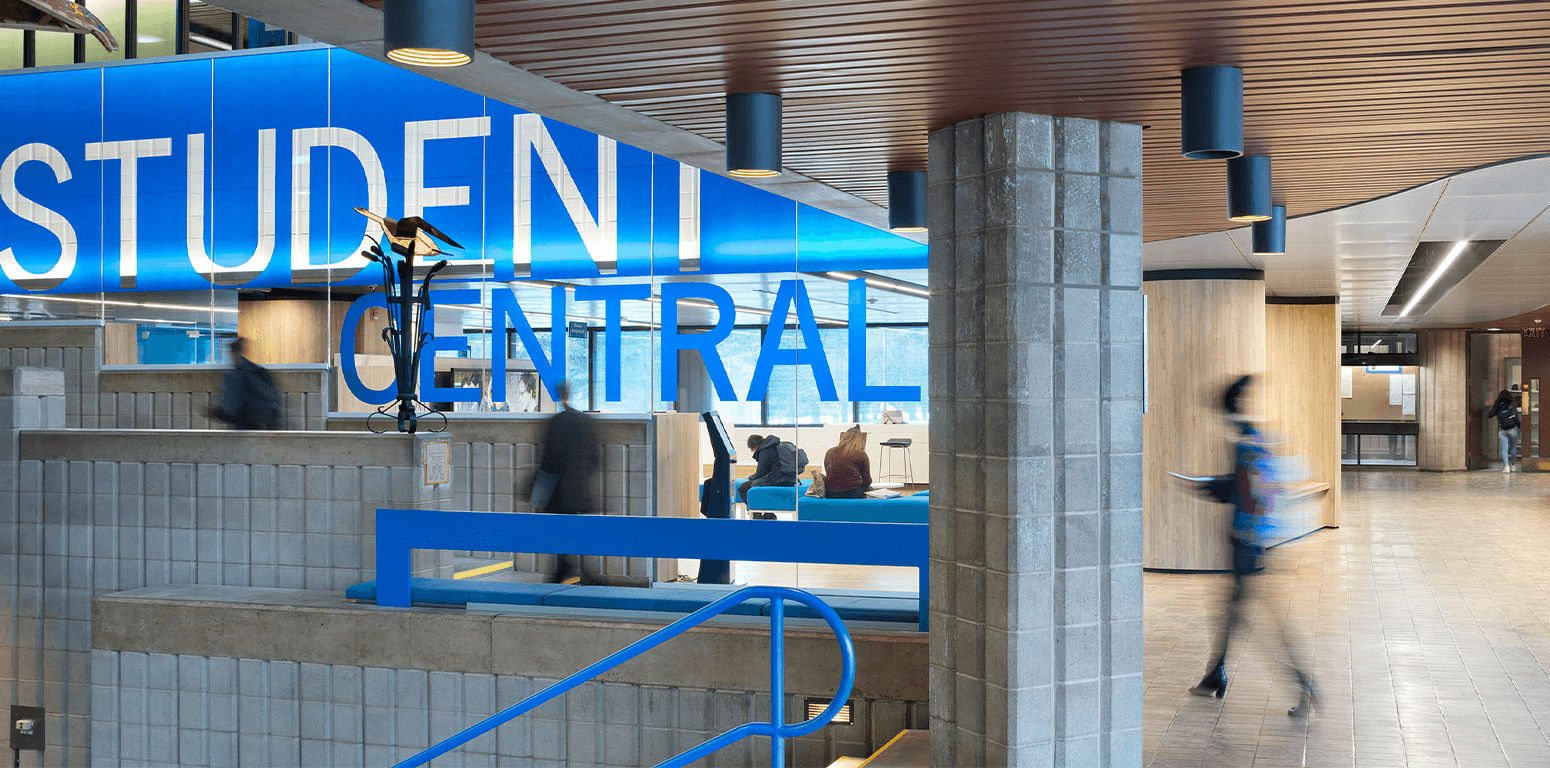
Lakehead University had two concerns when faced with the prospect of reimagining this space in their existing building. First, they required a multifaceted venue focused on servicing a variety of student needs. Their second requirement, no less vital, was to present a welcoming face to potential students on recruitment tours.

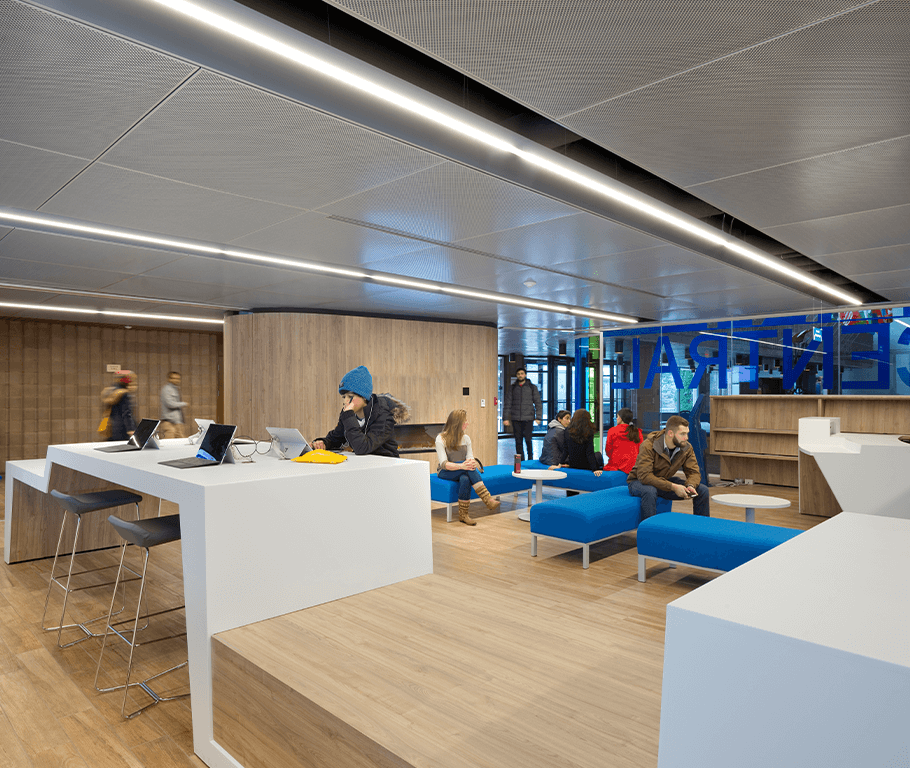
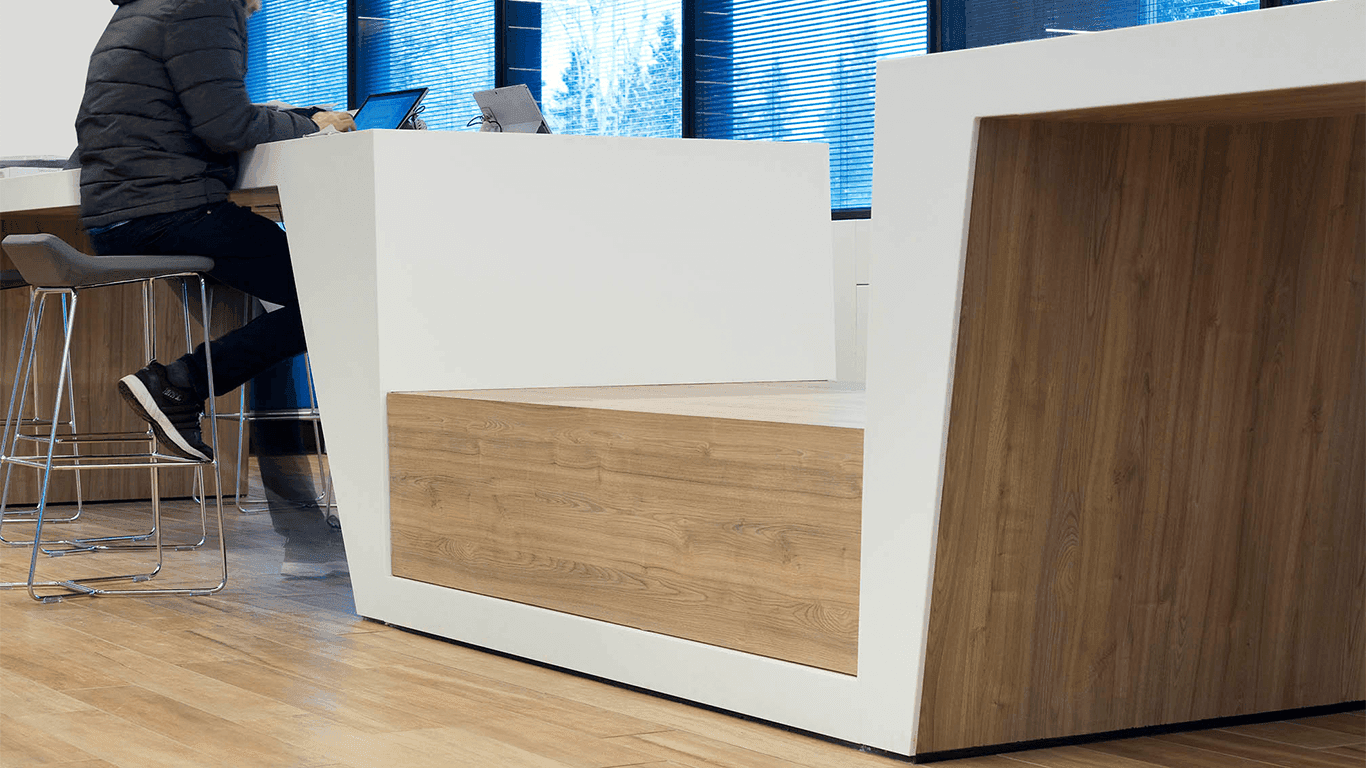
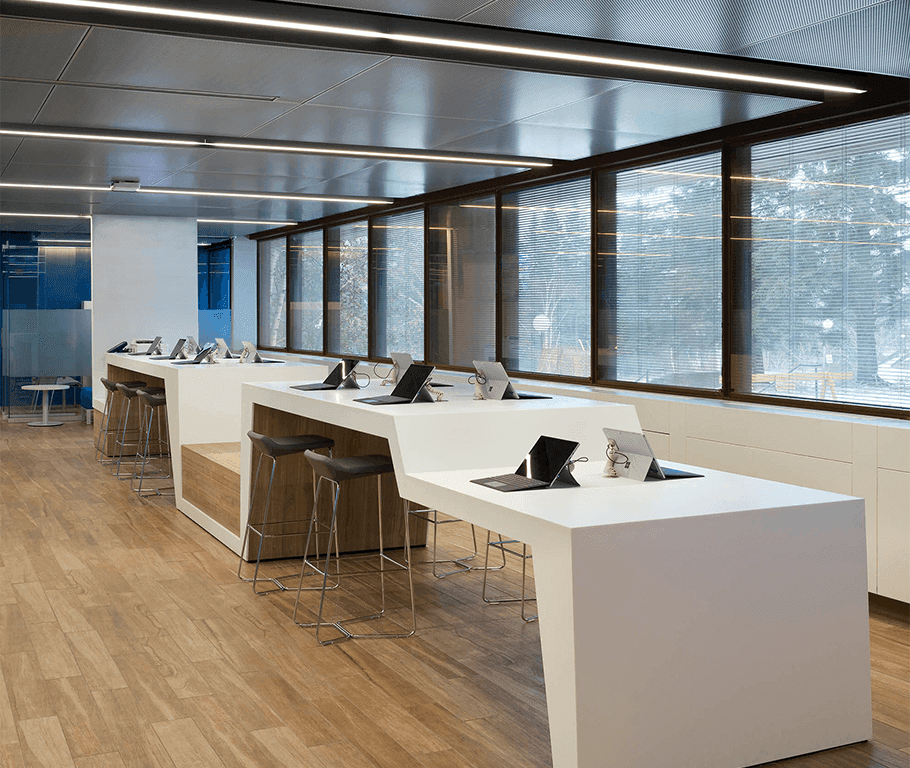
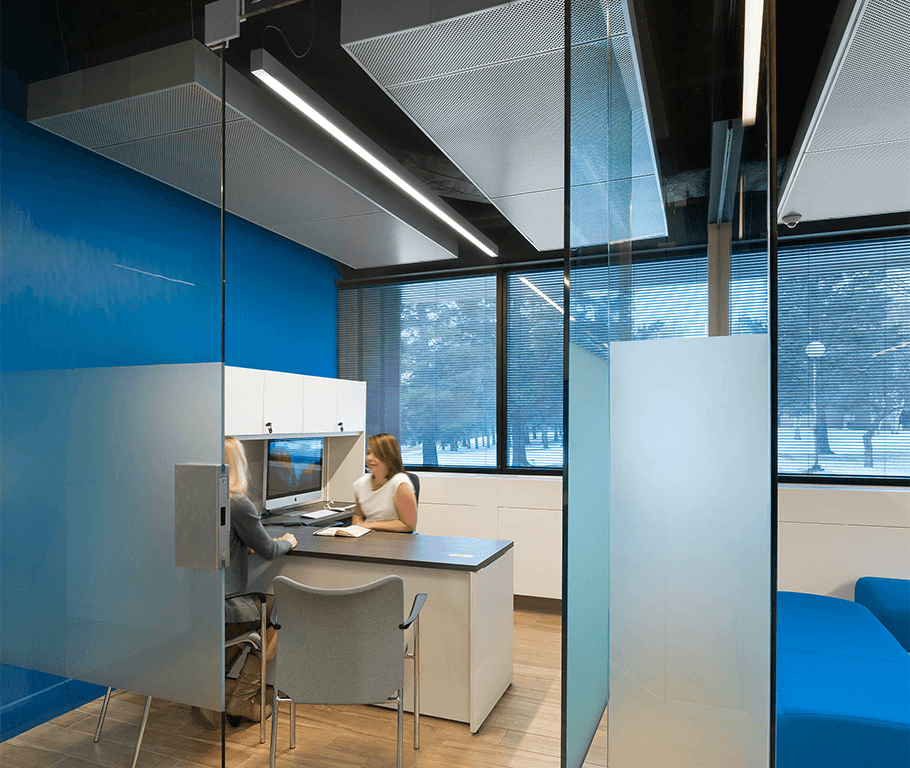
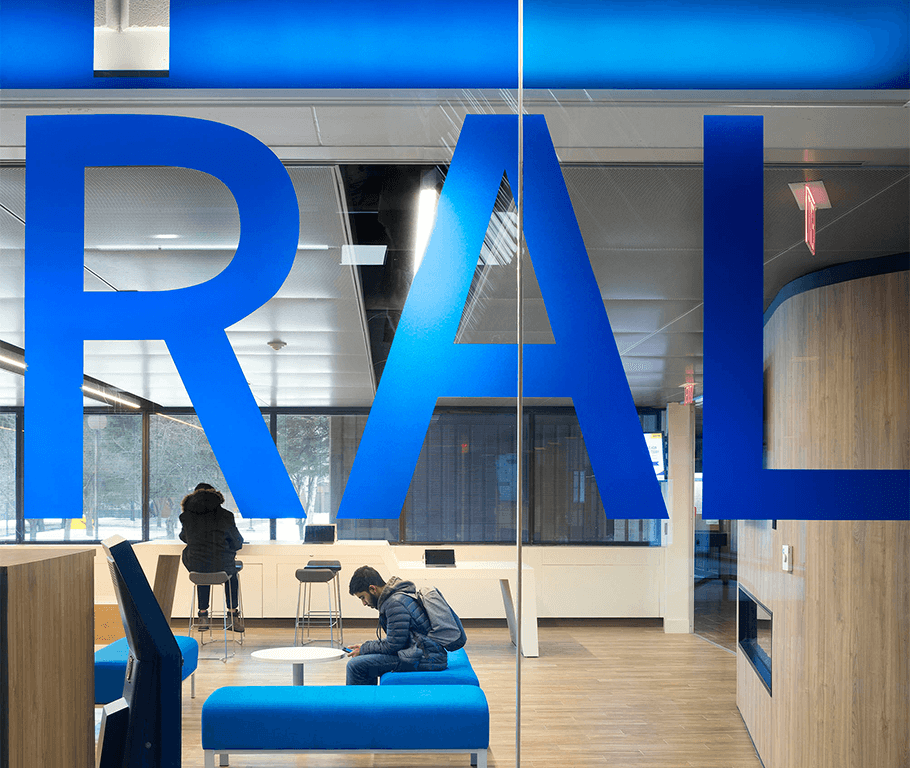
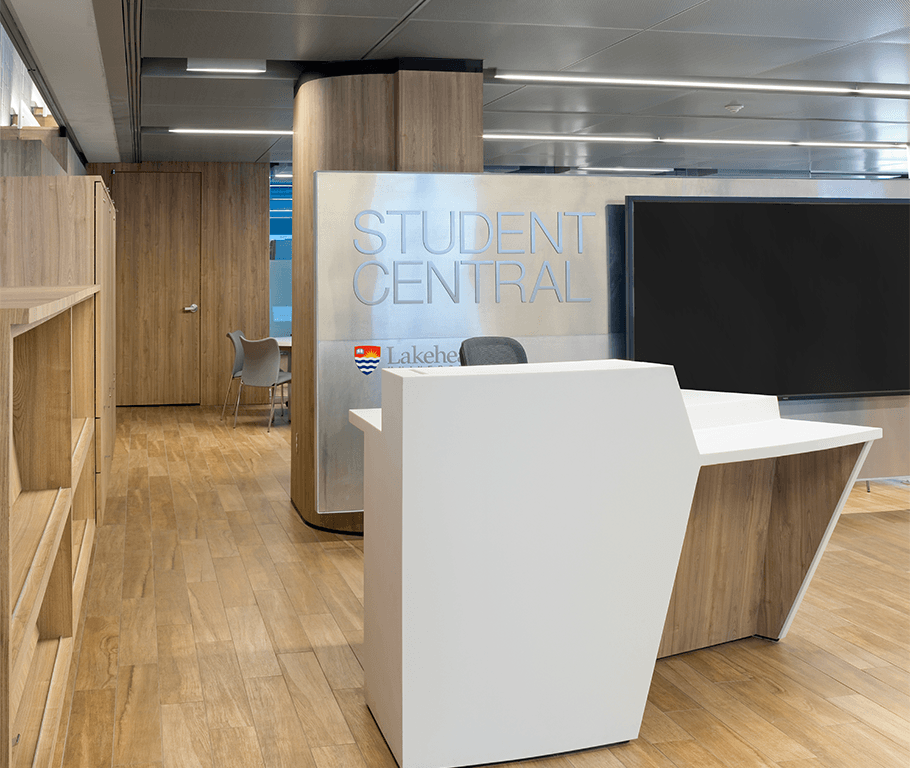
We pursued a design and selected materials for the revamped centre that express this welcoming gesture. Warm wood millwork and bespoke furnishings combine with a calming blue — Lakehead’s signature colour — on benches and feature walls while elements in metal mesh and white provide a clean, modern contrast. A deliberate use of curves — in the main doorway, in the rounded floor-to-ceiling bench that demarcates the entry, in the semi-private consultation cubicles — emphasizes the friendly feel, embracing visitors and drawing them in. We also custom-designed a multipurpose counter-meets-bench that manifests both flow and functionality. It provides multiple plug-ins at varying heights of access — seated, standing, and wheelchair levels — for mobile device users.

Where before there was just blank drywall and brick, Student Central now has its brand writ large on a new glass wall that borders the main quad. Not only does this allow much more light into the space, it makes this important campus destination highly visible and easy to access.

Project Information

Type
Education
Location
Thunder Bay, ON
Client
Lakehead University
Size
6,000 sf

Team
Tania Bortolotto, OAA, ARIDO
Alex Horber, OAA
Brian Muthaliff, OAA Intern
Viviane Chan, OAA

Awards & Press

Press
A Good Sit: Bortolotto’s Shape Shift Bench
Canadian Interiors, June, 2019