

Virtrium
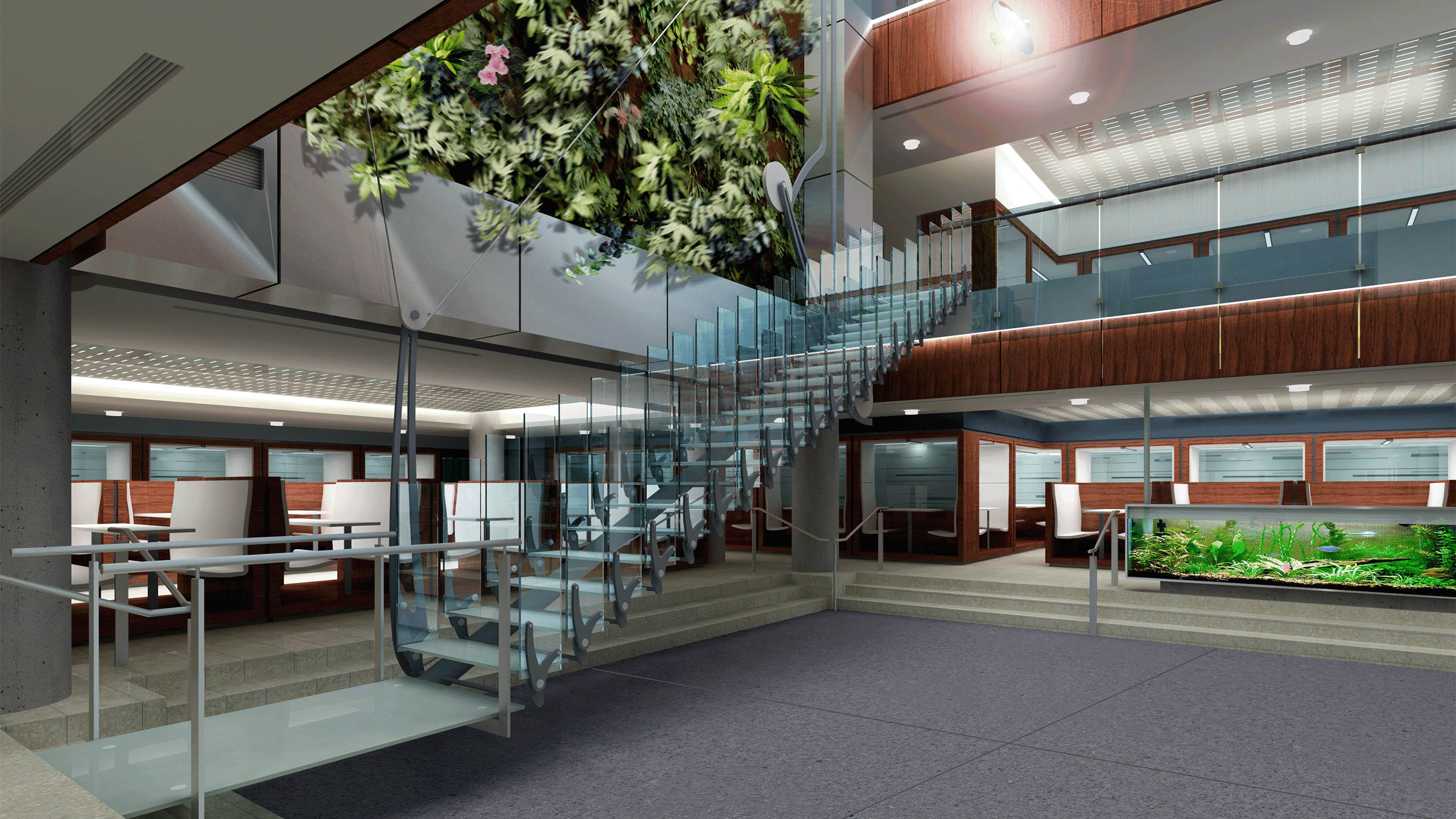
Our Virtrium design uses leading-edge sustainable technologies to transform a dark and windowless atrium into a literal living environment that enhances student well-being and reflects the University of Toronto’s Engineering Society’s innovative spirit.
Virtrium
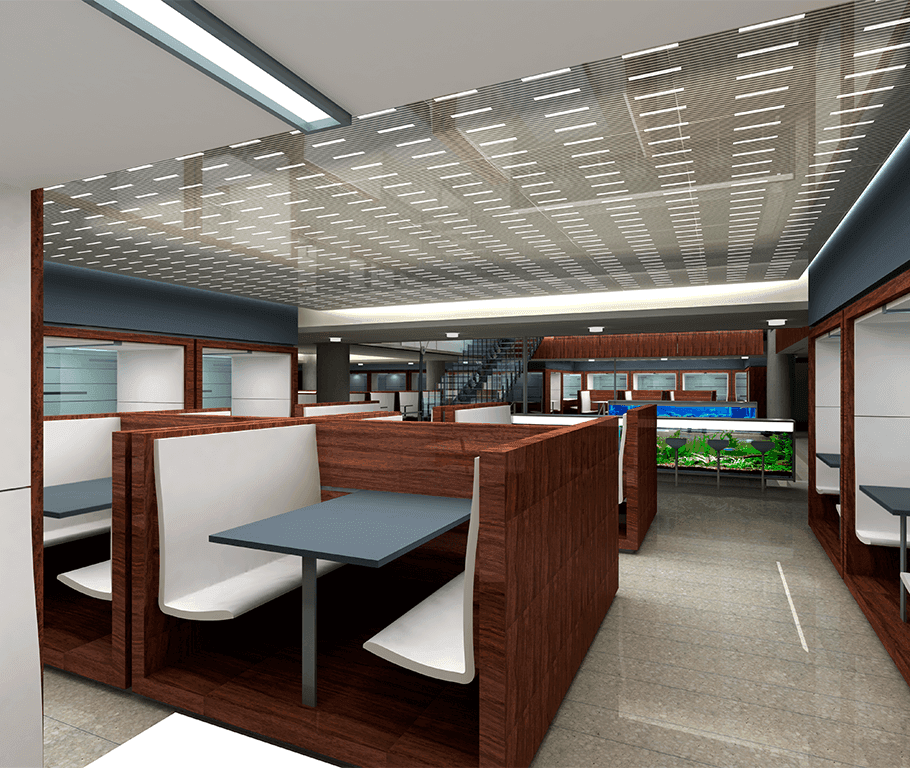
The Virtrium was conceived as a laboratory for testing and experimenting with state-of-the-art technologies that manifest the Engineering Society’s reputation for innovation and position it as a creative and forward-thinking force both within and beyond the University.
This windowless space, where students spend countless hours studying, learning, and socializing, provided an excellent — and challenging — opportunity to design for occupant health and well-being. With an emphasis on biophilic and technological interventions that connect students to the world outside, our design proposes digital means of capturing real-time changes in weather, lighting, and sounds and reflecting them internally within the building for students to experience. The project fundamentally reimagines the boundary between built and natural environments, inside and outside, real and digital.
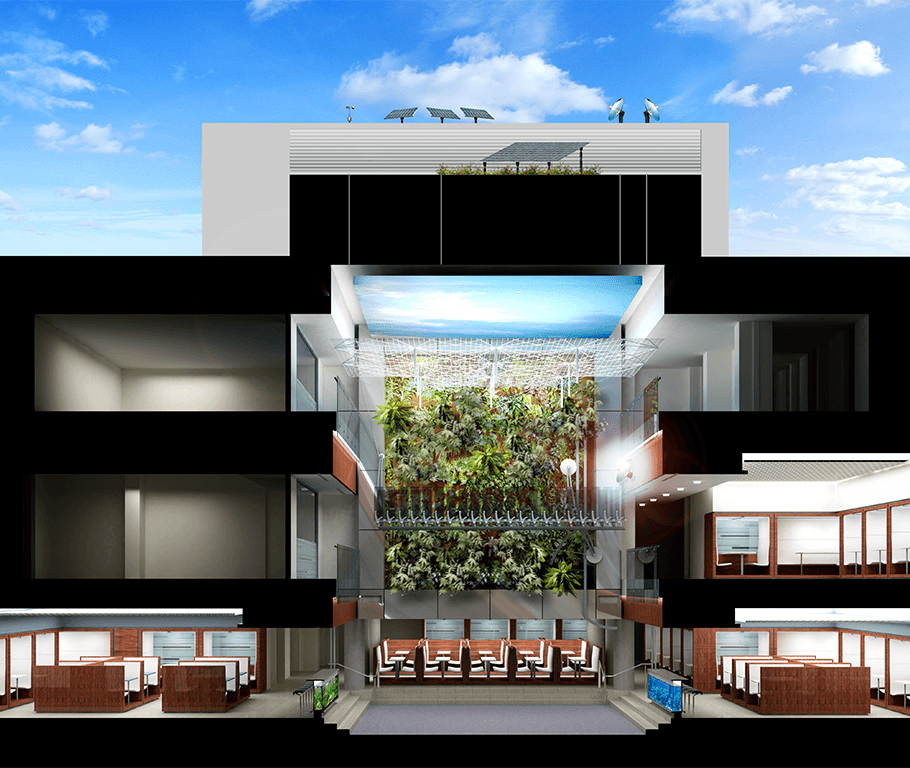
The feature element is a living wall, which captures airborne pollution inside the building and, through a process known as biofiltering, converts those pollutants into harmless byproducts. The biofiltering process does what healthy biosystems do through the process of photosynthesis: convert one system’s waste products into another’s nutrients, thereby purifying the air and removing about 80% of indoor contaminants
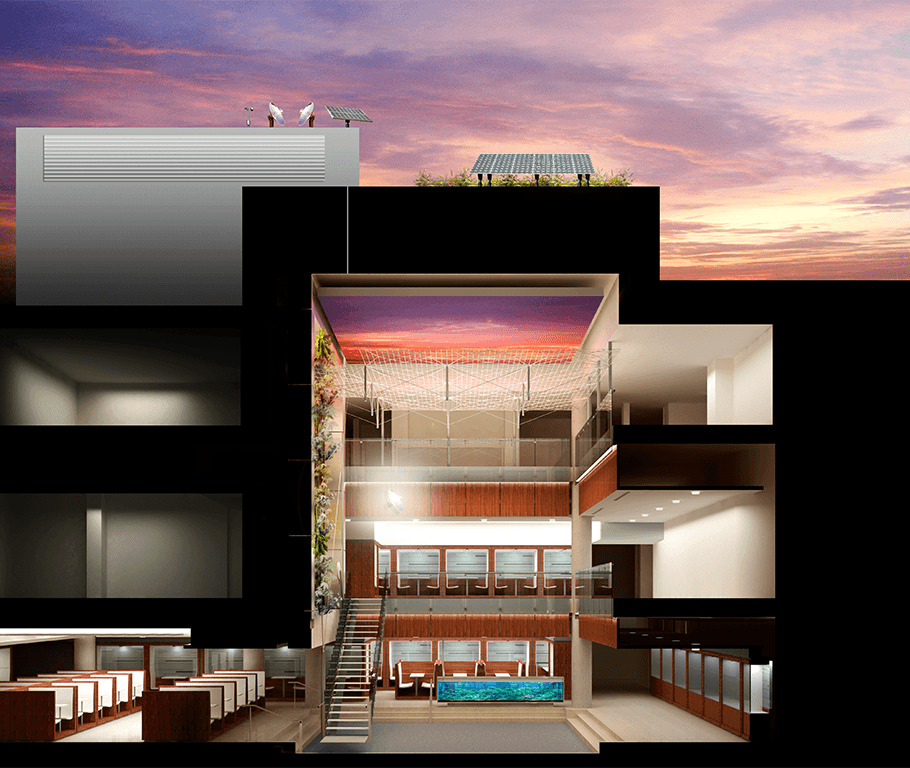
The scheme brings natural light into the biowall and disperses it throughout the space via fibre-optic bundles connected to sunlight collectors on the roof. The proposed Hybrid Solar Lighting (HSL) system switches to an electrical one, when needed, resulting in a potential savings of approximately 56,000 kilowatt hours per year. This feature also accrues benefits for students by helping them maintain their natural circadian rhythms, which are essential for focus, alertness, and effective study. Virtual-reality technologies enable the projection of real-time images of the sky onto the atrium ceiling.
The leading-edge nature of Virtrium’s design has enabled the Engineering Society to supplement its construction budget by inviting companies to install and test their latest equipment in the space. The Society is also applying for research and development funding for the installation and testing of the HSL system.
This windowless space, where students spend countless hours studying, learning, and socializing, provided an excellent — and challenging — opportunity to design for occupant health and well-being. With an emphasis on biophilic and technological interventions that connect students to the world outside, our design proposes digital means of capturing real-time changes in weather, lighting, and sounds and reflecting them internally within the building for students to experience. The project fundamentally reimagines the boundary between built and natural environments, inside and outside, real and digital.
The feature element is a living wall, which captures airborne pollution inside the building and, through a process known as biofiltering, converts those pollutants into harmless byproducts. The biofiltering process does what healthy biosystems do through the process of photosynthesis: convert one system’s waste products into another’s nutrients, thereby purifying the air and removing about 80% of indoor contaminants
The scheme brings natural light into the biowall and disperses it throughout the space via fibre-optic bundles connected to sunlight collectors on the roof. The proposed Hybrid Solar Lighting (HSL) system switches to an electrical one, when needed, resulting in a potential savings of approximately 56,000 kilowatt hours per year. This feature also accrues benefits for students by helping them maintain their natural circadian rhythms, which are essential for focus, alertness, and effective study. Virtual-reality technologies enable the projection of real-time images of the sky onto the atrium ceiling.
The leading-edge nature of Virtrium’s design has enabled the Engineering Society to supplement its construction budget by inviting companies to install and test their latest equipment in the space. The Society is also applying for research and development funding for the installation and testing of the HSL system.
Project Information
Type
Education
Location
Toronto, ON
Client
University of Toronto
Size
9,000 sf
Team
Tania Bortolotto, OAA, ARIDO, FRAIC
Alex Horber, OAA, LEED GA
Jerry Lin, OAA
Cherry Yeung, OAA Intern
Alex Horber, OAA, LEED GA
Jerry Lin, OAA
Cherry Yeung, OAA Intern
Awards & Press
Awards
Award of Excellence
Ontario Association of Architects, 2007
Ontario Association of Architects, 2007
Press
LEEP Architects designing for engineers
twentyandchange, 2007
A Green Solution for a Black Hole
Daily Commercial News, 2006
twentyandchange, 2007
A Green Solution for a Black Hole
Daily Commercial News, 2006